
You’re up for parents weekend at Cornell. Or commencement. Or your kid’s hockey game against Harvard, and you’ve got 36 hours and you’ve already eaten at every restaurant in Collegetown over the last four years. The temptation is another dinner at the Statler dining room and a walk around the Arts Quad. Don’t do that.
You’re 15 minutes from one of the older wine regions in the United States, with a half-day’s worth of tastings that come with views your kid’s apartment doesn’t have. Cayuga Lake spreads north of Ithaca for almost 40 miles, lined with wineries on both shores, and the southern end is genuinely walkable from a Cornell visit. You can do a tasting before lunch, see Taughannock Falls in the afternoon, get back to Ithaca for dinner, and your kid can join you for the second half. This is what to do with a Cornell weekend if you actually want to enjoy it.
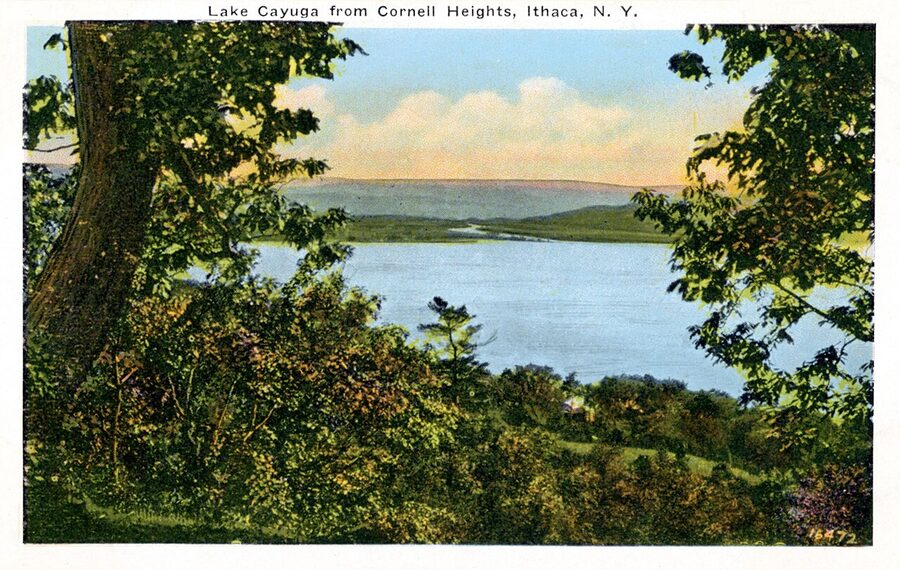
I grew up in upstate New York, and Ithaca was always the weekend trip when I was at college elsewhere. The geography is unusual: the campus sits about 400 feet above the lake, on a hill cut by gorges, with waterfalls inside the city limits. Half the wineries you’d want to visit are within 30 minutes of the McGraw Tower. The other half require a longer drive but reward it with the best Cabernet Franc and Riesling on the trail.
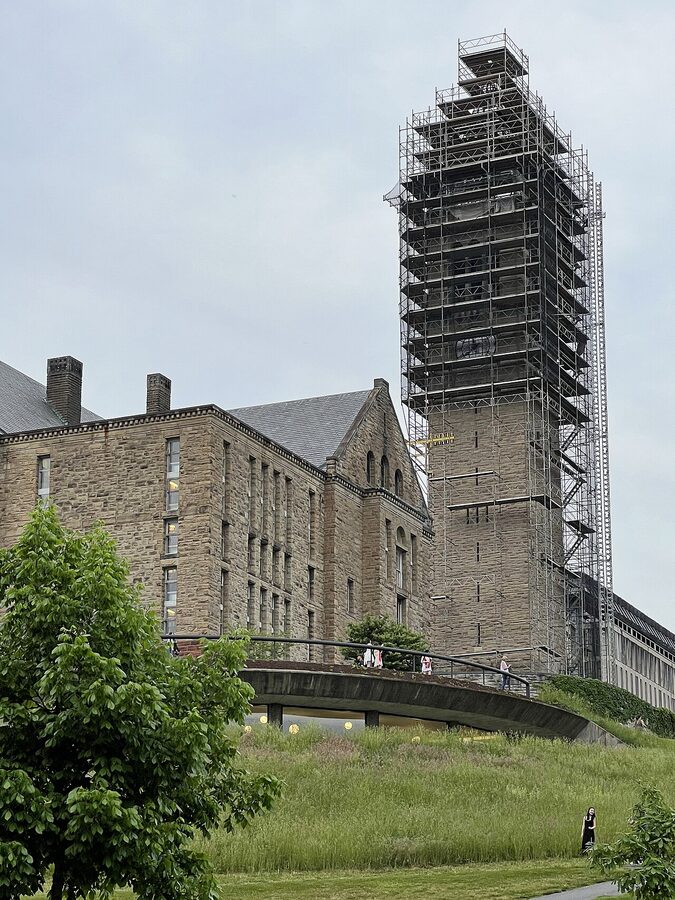

This is a guide to using a Cornell visit to taste your way through south Cayuga without burning the whole day in a car. If you have more time, the full Cayuga Wine Trail loop covers all 16 wineries on what’s officially the oldest organised wine trail in the US, founded 1983. If you have a full weekend and want to compare lakes, jump to the Seneca Lake guide next door, which has more depth and more reds. The Finger Lakes pillar ties everything together.

In This Article
- The 36-Hour Cornell-Visit Plan
- Why Cayuga and Not Seneca
- Six Mile Creek Vineyard: The In-Town Stop
- The South Cayuga Half-Day Loop
- Sheldrake Point Winery
- Hosmer Winery
- Long Point Winery
- Bellwether Hard Cider
- Tour Operators if You’d Rather Not Drive
- What a half-day actually costs
- Where to Stay in Ithaca
- The Statler Hotel at Cornell University
- Argos Inn
- William Henry Miller Inn
- Hotel Ithaca
- Combining Wine With What Else to Do
- Taughannock Falls
- Cornell Botanic Gardens (formerly Cornell Plantations)
- Ithaca Farmers Market
- When to Visit
- Getting Here Without a Car
- The Wine Itself: What You’re Tasting
- What to Skip
- One More Thing About Cornell
The 36-Hour Cornell-Visit Plan
If you only read one section of this article, read this one. This is what I’d actually do given a parents-weekend Friday-to-Sunday window.
Friday afternoon (you’ve just landed): Check into your hotel. Walk to Six Mile Creek Vineyard. It’s seven minutes from downtown Ithaca, on Slaterville Road, and it’s the only winery actually inside the city limits. Tasting and a glass on the porch. Back to dinner downtown.
Saturday morning: Breakfast with your kid. Drop them back at whatever they’re doing. Drive 25 minutes south down Route 89 along the west shore. Hit Sheldrake Point first (opens 12pm), then Hosmer next door, then back via Bellwether Hard Cider in Trumansburg. Stop at Taughannock Falls on the way home for 30 minutes of legs. Back in town by 4pm, pick up your kid, dinner together.
Sunday morning: Cornell Botanic Gardens. Then if it’s a Saturday-Sunday market day, the Ithaca Farmers Market down on the lake before you fly out. If your kid wants to come for the wine portion, that’s fine; the Saturday route works equally well as a parents-and-student outing if everyone’s of age.
That’s the plan. Below is everything you need to actually execute it: which wineries, which hotel, which falls, what to skip.
Why Cayuga and Not Seneca
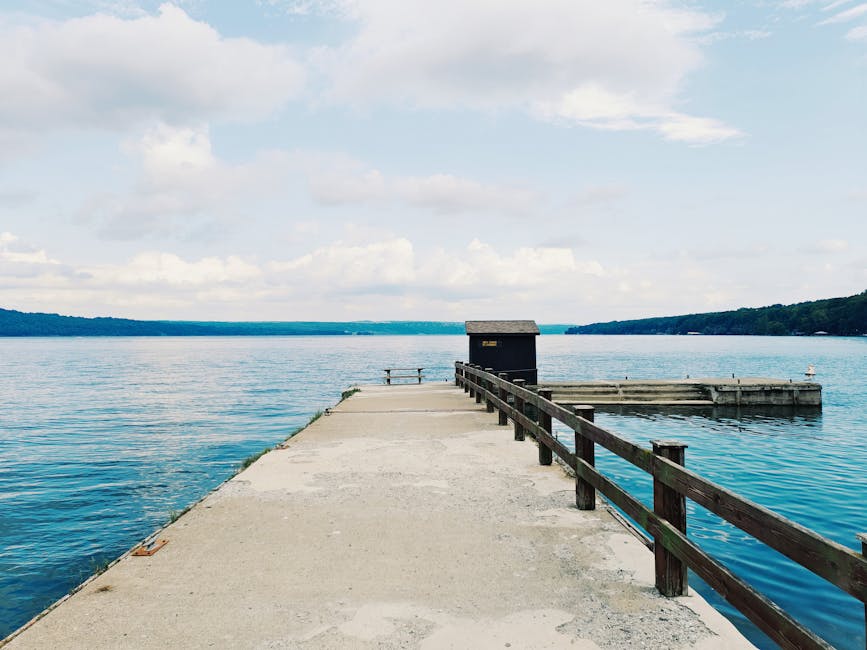
Locals will tell you Seneca has the better wineries. They’re mostly right. Hermann J. Wiemer, Forge Cellars, Boundary Breaks, Lamoreaux Landing, Anthony Road. The depth is real. But Seneca’s southern tip is at Watkins Glen, an hour from Ithaca, which means a Seneca day from Cornell is two hours of driving plus tastings. That’s a full day and you’ll come home tired.
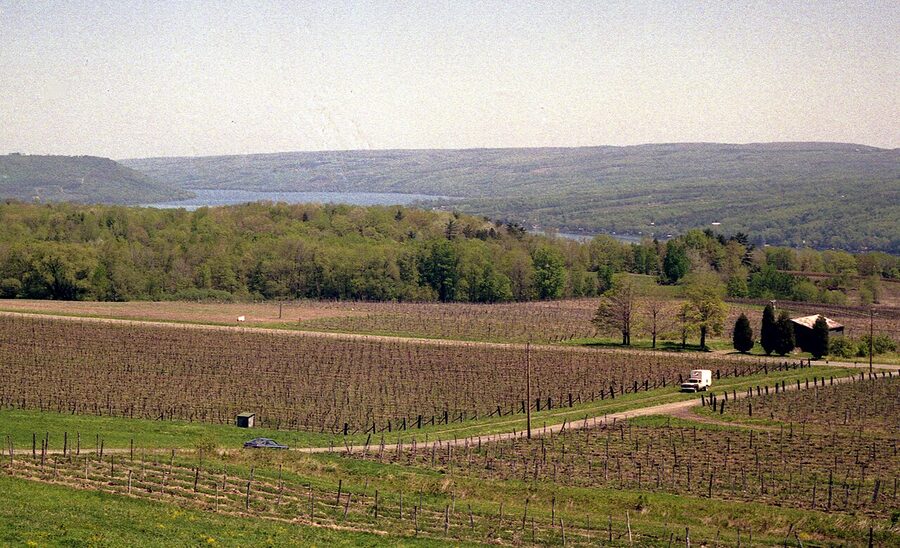
Cayuga is on your doorstep. The southern wineries (Sheldrake Point, Hosmer, Long Point) are 25 minutes from the Statler. The mid-lake cluster (Buttonwood Grove, Thirsty Owl, Goose Watch) is 35 to 40. You can do three or four tastings, see a waterfall, and be back in Ithaca for dinner. That’s the trade-off. Cayuga isn’t the deeper trail; it’s the easier one.
One more thing. Cayuga’s southern end runs about 10 to 15 degrees warmer than the rest of the Finger Lakes in any given growing season, because the lake is shallower at the south end and the surrounding hills hold heat. This is why Sheldrake Point can ripen Cabernet Franc reliably and why their dry rosé is the best-selling wine in the entire Finger Lakes region. So you’re not slumming it on the lesser lake. You’re just getting a more compact version, with a different set of strengths.
Six Mile Creek Vineyard: The In-Town Stop
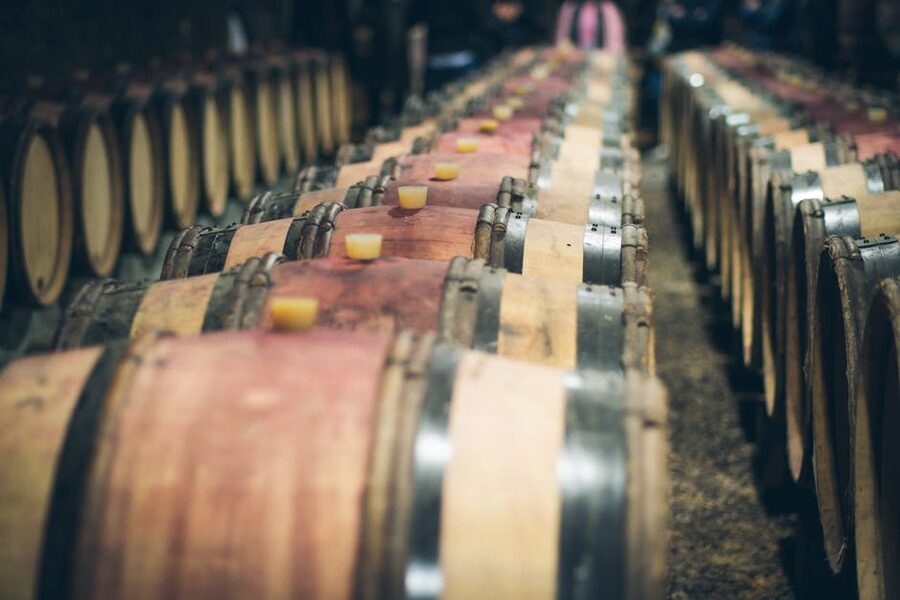
Address: 1551 Slaterville Road, about a 10-minute drive from the Cornell campus. This is the move on Friday afternoon if you’ve just landed and don’t want to commit to a 25-minute drive yet. It’s the only winery inside the Ithaca city limits, in a restored 19th-century Dutch Colonial barn, and they’ve been at it for over 30 years.
Their 2016 Cabernet Franc won the Governor’s Cup at the New York Wine Classic in 2019, which is the top prize across more than 450 wineries in the state. That matters because Cab Franc is the variety the Finger Lakes grows best, and most years a Seneca producer wins. A Cayuga winery beating Seneca for the state’s top honour was not predicted by anyone. The Cab Franc is still the wine to taste here.
They also distill their own spirits in a copper pot still, made from wine. Vodka, gin, and an Italian-style range of liqueurs. If your kid is over 21 and joining you, the spirits flight is fun and unusual, because most Finger Lakes wineries don’t distill at all.
Tasting reservations are required for groups of any size, max 12 people. They take walk-ins for small groups during business hours but a quick call ahead is sensible. Open seven days a week May through October, slightly shorter winter hours. Stay nearby on Booking.com if you want to make a night of it.
The South Cayuga Half-Day Loop
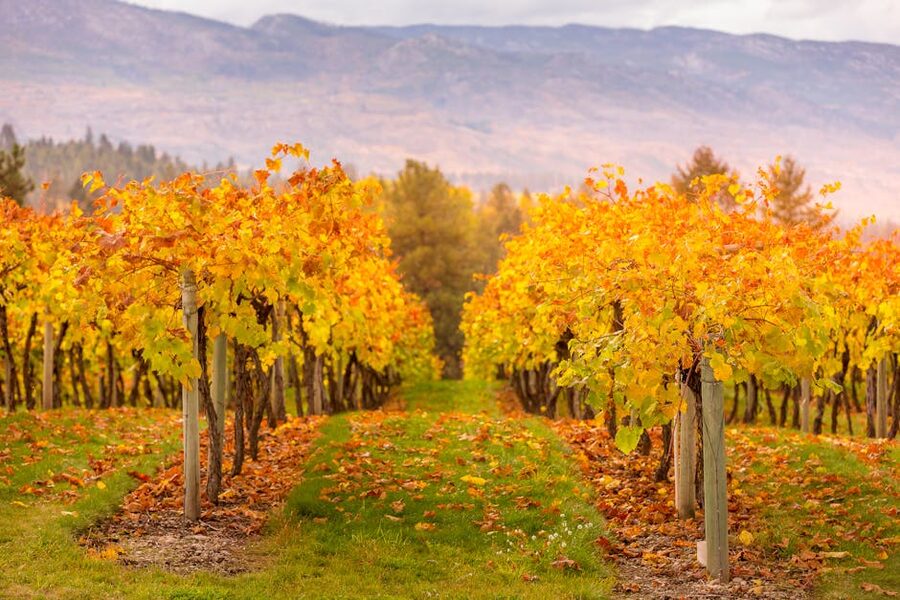
This is the core of what to do with a Cornell weekend. Three wineries, one cidery, optionally one waterfall, all reachable in a single morning-into-afternoon. Drive Route 89 north out of Ithaca up the west shore. The wineries are in Ovid, Interlaken, and Romulus, but the addresses are misleading; they’re all on the lake within about 12 miles of each other.
Order I’d do them in: Sheldrake Point first because they open at noon and they’re the best. Hosmer second because they’re literally next door. Long Point third because it’s a little further north and they have one of the better lake-view patios. Then back via Bellwether Hard Cider on the way home if you’ve got time and palate left.
Sheldrake Point Winery
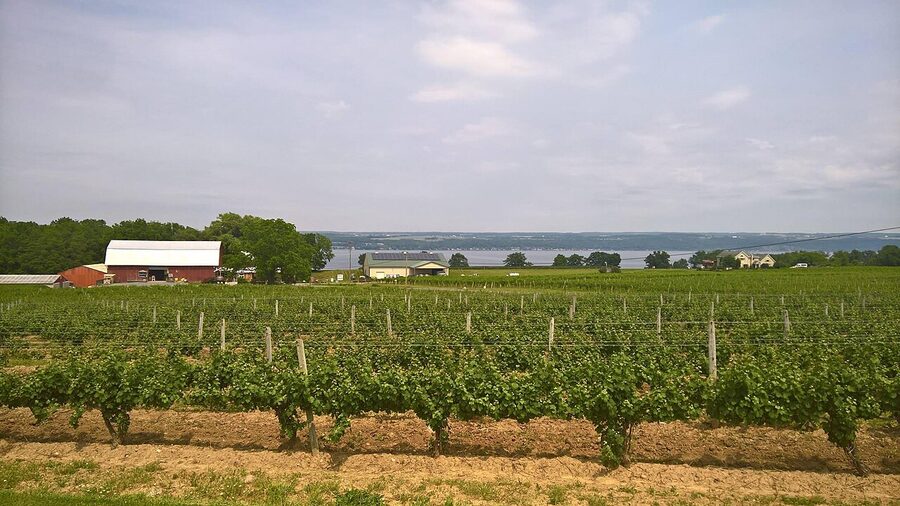

Address: 7448 County Road 153, Ovid. Open daily noon to 5pm. About 22 miles from Ithaca, so call it 35 minutes door-to-door. This is the winery I’d send any Cornell parent to if they only had time for one. Lake views in front, vineyards behind, gardens around the tasting room, and one of the few wineries on Cayuga where you can pull a boat right up to the dock.
What to drink: their dry rosé. It is the best-selling wine in the entire Finger Lakes region, year in and year out, and it’s because it actually deserves to be. Try the Cabernet Franc as well, which the south end’s warmer microclimate lets them ripen more reliably than producers further north. Their Riesling is solid, though I’d argue Hosmer’s is more interesting; we’ll get to that. They also do an ice wine that’s actually properly made (lots of NY ice wines aren’t), worth the small upcharge to taste.
Reservations are recommended, not required. Groups over six don’t get seated, so if you’re a parents-weekend group, splinter into pairs or call ahead. The patio is the place to be in summer; in shoulder season they’ll seat you indoors with the lake still in view through big windows.
Hosmer Winery
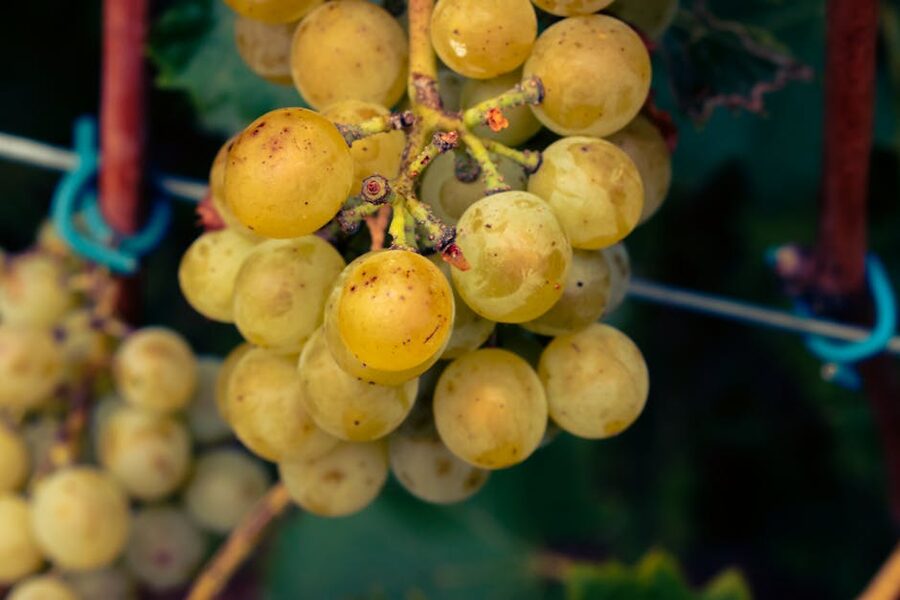
Address: 6999 NY-89, Ovid. Right next to Sheldrake Point, which is why I always pair them. The tasting style is more casual, flight-style, in plastic cups with a souvenir glass to take home if you want it. Don’t let the plastic cups fool you; the wines are very good.
What to drink: the Grüner Veltliner, which almost nobody else in the region grows, and the Cayuga White, the regional hybrid that the Cornell viticulture program developed and which has become a Finger Lakes signature. (Yes, your kid’s university literally invented a wine grape. Bring this up at dinner.) Their Cabernet Franc is one of the better ones I’ve had on Cayuga, and their Riesling is genuinely interesting, drier and more mineral than most.
Outside seating is small. In good weather it’s worth grabbing the patio if you can. Reservations are recommended but not required, especially for two people. If you’re rolling deep with parents-weekend dads, call ahead.
Long Point Winery
Address: 1485 Lake Road, Aurora. Slightly further up the east side, and the prettiest patio of the three. Family-owned, smaller than Sheldrake or Hosmer, and the dry reds are above what you’d expect from this end of the trail. The Pinot Noir is the real thing, not over-extracted, and the Cab Franc holds up. Lake views from a deck that catches the afternoon sun.
If you only have time for two south-end stops, skip Long Point and put Bellwether in the third slot instead. But if you’ve got the day and your kid’s not joining you for the wine, Long Point is the lingering stop, the place to sit with a glass for an hour. Don’t try to rush it.
Bellwether Hard Cider
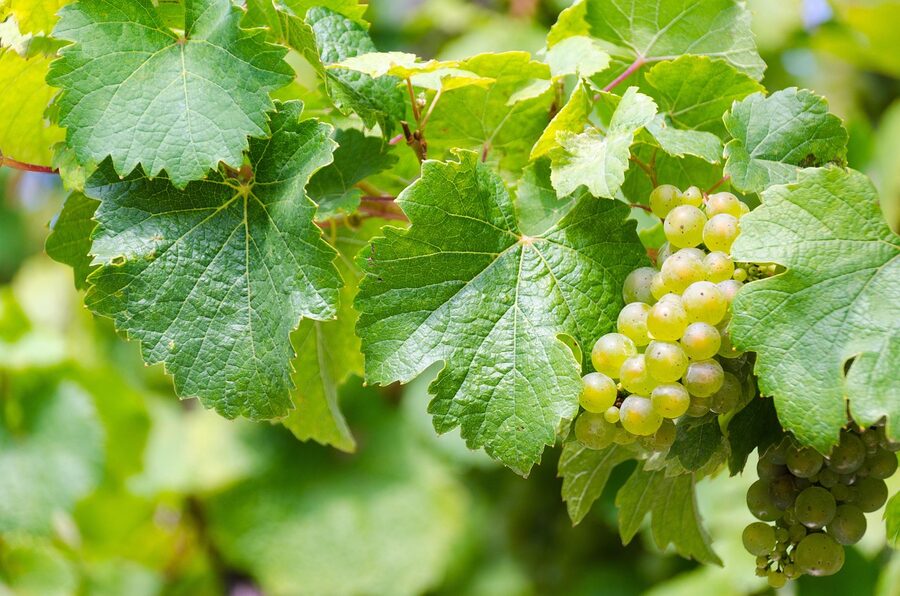
Address: 9070 NY-89, Trumansburg. On the way back to Ithaca from the south Cayuga loop, about 12 miles north of town. They make hard cider from local apples and they do it well. The dry ciders are the ones to taste; the King Baldwin is a single-varietal that holds up against a lot of beers. They also make a small range of wines and meads.
This is a good last stop because cider after wine resets the palate, and because it’s right on the route home. Open seasonally; check ahead in winter. If you’d rather not drive yourself, Viator lists Ithaca-based wine tour operators that include Bellwether on their itineraries.
Tour Operators if You’d Rather Not Drive
Driving yourself works for a half-day with two or three tastings, especially if one parent’s not drinking. For longer days or for groups, a tour is the right call. The Tompkins County roads back toward Ithaca include some narrow lake-shore stretches that are unpleasant in the dark, and tasting flights add up.
The Ithaca-based operators worth knowing about run shuttles between three to five wineries, most include lunch, and most stick to the Cayuga trail. Crush Beer & Wine Tours runs a Cayuga-specific itinerary; Bianconi Tours is a smaller family operator with private options; Water to Wine Tours offers lake-and-vineyard combinations from Aurora. Browse current Ithaca wine tours on Viator for the full list with current pricing.
If you’re coming up from New York City and skipping the car altogether, GetYourGuide has Finger Lakes day-tour options, though most are full-day affairs that don’t make sense if you’re already in Ithaca for a Cornell visit.
What a half-day actually costs
| Option | Hours | Wineries | Per person (USD) | Includes |
|---|---|---|---|---|
| Drive yourself | flexible | 3-4 | $50-80 | Tasting fees only ($10-20 each); rental car or your own vehicle |
| Crush Cayuga Tour (group) | 5-6 hrs | 3-4 | $129+ | Transport from Ithaca, tastings, light lunch |
| Bianconi private (small group) | 6 hrs | 3-4 | $200+ | Private vehicle, customised itinerary, tastings |
| Water to Wine (lake + vineyards) | 4 hrs | 2-3 | $110+ | Boat tour plus tasting room visits |
| Viator Seneca Lake South option | 6 hrs | 4 | $130+ | Pickup, lunch, tastings (Seneca side) |
Prices vary by season and day. The drive-yourself option is cheapest by a wide margin and gives you full control over which wineries to visit; the tour options buy you a designated driver and a guide who knows the producers. If you’re a couple, drive. If you’re four or more, the math on the group tours starts to make sense.
Where to Stay in Ithaca
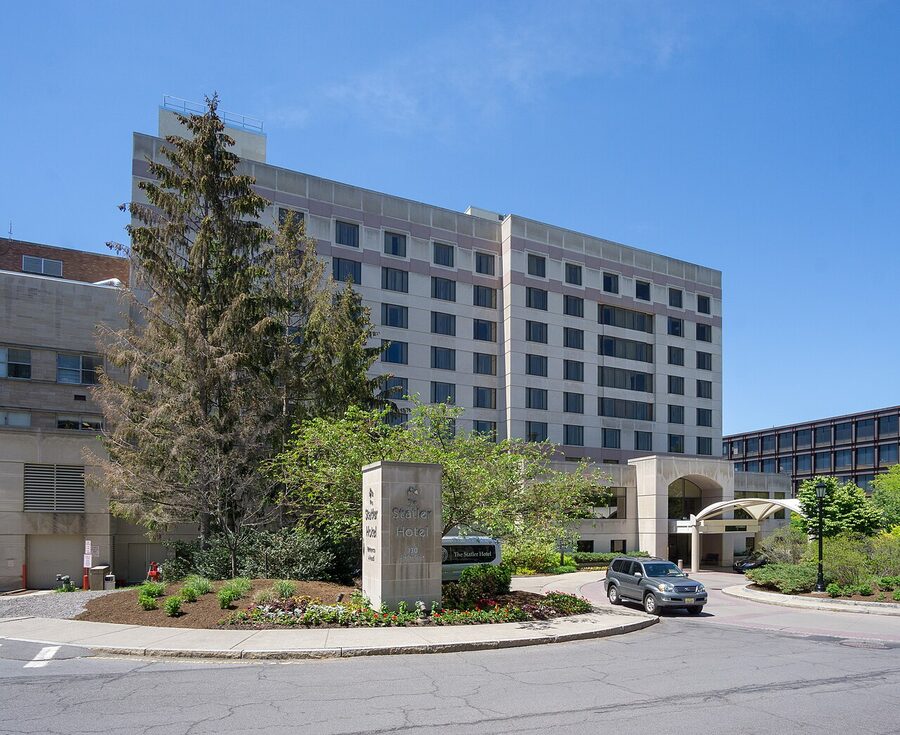

Four hotels worth your money for a Cornell visit. They line up roughly: on-campus, boutique, B&B, downtown.
The Statler Hotel at Cornell University
130 Statler Drive, on Cornell campus. The closest you can sleep to your kid’s classroom. The Nolan School of Hotel Administration runs it as a teaching hotel, which sounds like it should be a downside but is genuinely an upside: the students are being graded on your stay, the management is professional, and it’s a Four Diamond property. Tower-view rooms look out over the lake. Valet parking is $30 a night.
Worth it for: parents who want to be on campus, ease of getting to events, food and drink at Taverna Banfi (their Italian restaurant) and Mac’s Cafe. The catch is that during commencement, parents weekend, and key sports weekends, this place sells out 12 months ahead and prices spike. Book early or look elsewhere.
Check Statler Hotel availability on Booking.com
Argos Inn
408 East State Street, downtown. A LEED-certified restored mansion that was once the mayor’s house and later the Duncan Hines world headquarters. The bar (Bar Argos) is open daily 4 to 10pm and is the most stylish drinking room in Ithaca by some distance. The Argos Warehouse, the late-night lounge, runs Thursday to Saturday.
Worth it for: parents who don’t need to be on campus and would rather have a real boutique experience. Walk to dinner at Hazelnut Kitchen or Le Café Cent-Dix; walk to the Commons; drive to campus in eight minutes. Smaller than the Statler, more personal, often has rooms when the Statler is full. Quirky in good ways: claw-foot tubs, custom wallpaper, a record player in the lounge.
Check Argos Inn availability on Booking.com
William Henry Miller Inn
303 North Aurora Street, downtown. A bed-and-breakfast in a Queen Anne house designed by Cornell’s first architecture student in 1880. Nine rooms, two of them suites with separate sitting areas, all with private bathrooms. Breakfast is the draw; cooked to order, two courses, at a long communal table. Dessert is delivered to your room in the evening.
Worth it for: parents who want something that feels properly residential and don’t mind chatty breakfast tablemates. Walk to Ithaca Commons (five minutes), drive to campus (six minutes). It’s a B&B in the genuine sense, not a boutique hotel pretending to be one. If you’re the kind of person who likes a personal touch and a chat with the innkeeper, this is your stay.
Check William Henry Miller Inn availability on Booking.com
Hotel Ithaca
222 South Cayuga Street, downtown. The full-service downtown option. Renovated, indoor pool, on-site restaurant (Hops & Vines), full conference facilities. Not glamorous, but consistent. The location is excellent: directly opposite the Ithaca Commons, walk to almost every downtown restaurant, ten minutes’ drive to campus.
Worth it for: families who need two rooms or three, parents who want a pool for younger siblings, and anyone who’s been burned by quirky B&B plumbing. The least character of the four options here, the most reliability.
Check Hotel Ithaca availability on Booking.com
Combining Wine With What Else to Do
Half the point of using a Cornell visit for wine is that you’re already there for other reasons. Three things genuinely worth folding into the itinerary.
Taughannock Falls
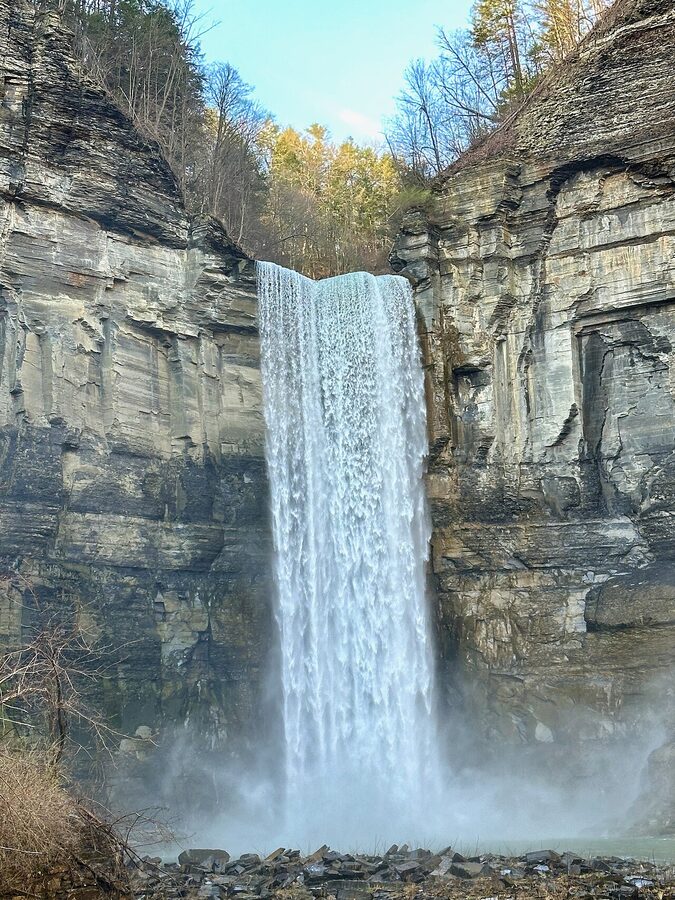

The single best non-wine sight you can fit into a wine day. Taughannock drops 215 feet in a single plunge, which makes it taller than Niagara. The state park is on Route 89 between Ithaca and the Sheldrake Point area, so you’ll drive past it both ways on a south Cayuga winery loop.
The Lower Falls overlook is right next to the parking lot. The Gorge Trail walks you up to the base in about 20 minutes (0.75 mile each way, flat). The Rim Trail takes about an hour and a half round-trip with proper views. If you’ve got 30 minutes to spare on the way home from wineries, do the Gorge Trail; if you’ve got two hours, do the Rim. Park admission is $10 per car in season. Restrooms at the entrance.
The waterfall is more impressive after rain or in spring meltwater season. In late summer it can be a trickle. Doesn’t matter; the gorge itself is the spectacle.
Cornell Botanic Gardens (formerly Cornell Plantations)

One Plantations Road, on Cornell campus. Free admission, open dawn to dusk every day of the year. 25 acres of cultivated gardens plus 4,000 acres of natural areas including Cascadilla Gorge. The herb garden, the rhododendron collection, and the F.R. Newman Arboretum are the main draws.
Worth it for: a 60- to 90-minute walk between activities, especially if your kid is busy with their roommates and you’ve got mid-morning to fill. You can see significant chunks in an hour; the natural areas need longer. Renamed from Cornell Plantations in 2016 because of the historical loading on the word, but locals still call it the Plantations.
Ithaca Farmers Market
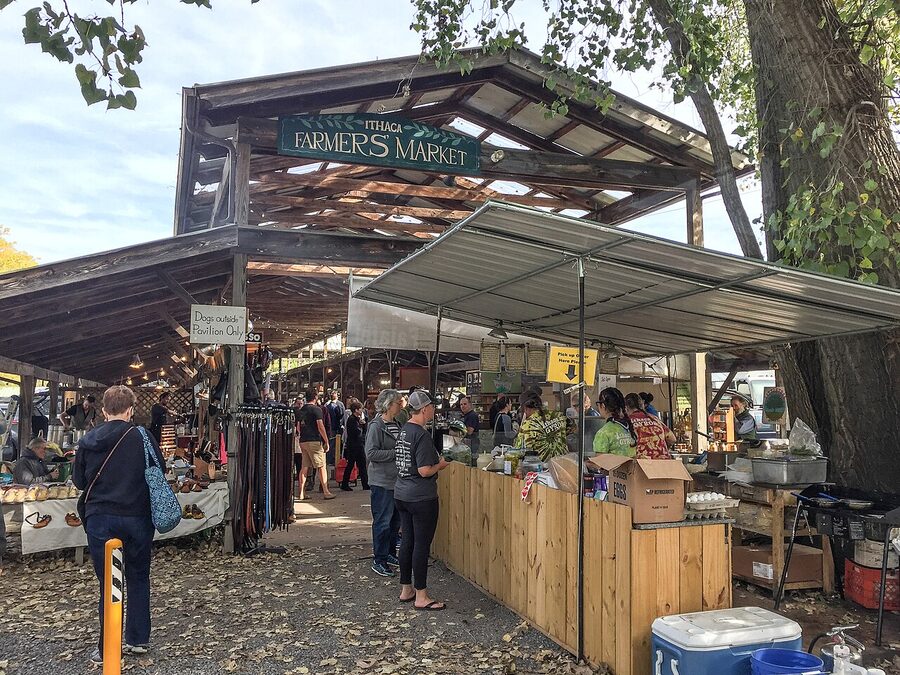

Steamboat Landing, on the inlet at the south end of Cayuga Lake. Saturdays year-round (9am to 3pm in season, shorter in winter), Sundays April through December (10am to 3pm). The market is in a permanent open-sided pavilion right on the water; about 130 vendors when fully running.
What to do here: breakfast or lunch. The food vendors range from Macro Mama (everything bowls), Silo Food Truck (Mexican), Boulder Coffee, to Saltonstall pizza. Cornell student bands sometimes play. Wine vendors from the Cayuga Trail set up here too, so if you missed a stop on the trail, you can usually catch their wines for a tasting at the market and skip the drive.
Worth it for: a Sunday morning before flying out, with your kid in tow if they’re up before noon. It’s also where Ithaca locals actually shop, so it’s not a tourist set piece; the produce is unpretty and the prepared food is real cooking, not market theatre.
When to Visit
Best windows for a Cornell-visit wine day, in order of preference.
Late September to mid-October: Peak fall foliage, harvest still happening at the wineries, Cornell football home games. The downside is Saturday tasting rooms get crowded and hotels book out a year ahead for parents weekend (typically the last weekend of October). Book early.
Mid-May to late June: Cornell graduation is the third or fourth weekend of May; the city is jammed and hotel prices are absurd. After commencement and through June, weather is warming, vines are leafing out, the lake is at its best. Reunion weekend (early June) is its own peak; otherwise mid-week visits are cheap and uncrowded.
July and August: Hot, often muggy, Saturday tasting rooms busy with Rochester and Syracuse weekenders. Patios in full use. Lake activities at their peak. Most wineries have summer hours through early November.
Winter: Some wineries close or run shorter hours; check first. Hotel prices crater. Six Mile Creek and Sheldrake Point stay open year-round. The lake-effect snow is real, though Ithaca gets less than Rochester or Syracuse because it’s south of the worst of it.
Avoid: the weekend of Cornell hockey vs Harvard at Lynah Rink (the tickets and the hotel rooms both book out months ahead), and graduation weekend itself, when the Statler has 18-month lead times and hotels in Trumansburg fill up.
Getting Here Without a Car
Ithaca Tompkins International (ITH) is the small commercial airport, with a few flights a day from Detroit (Delta) and Newark (United). Most parents fly into Syracuse (SYR), about an hour north, or Rochester (ROC), about 90 minutes northwest. There’s a shuttle from Syracuse (Tompkins Trips, advance booking required) and a Greyhound option from a few cities.
Once in Ithaca, no car means you’re limited. Six Mile Creek is a $20 Uber from downtown. The south Cayuga wineries are not Uber-able from town in any sensible way; you’ll spend $50+ each direction and your driver will be unhappy. This is the case where a tour operator earns its fee. Check current Ithaca tour pickups on Viator if you’re car-free; most include hotel pickup.
If you’re driving up from New York City, allow four to four and a half hours via I-80 and the Southern Tier. From Boston, six hours via I-90 and Route 17. From Toronto, four and a half via the QEW.
The Wine Itself: What You’re Tasting
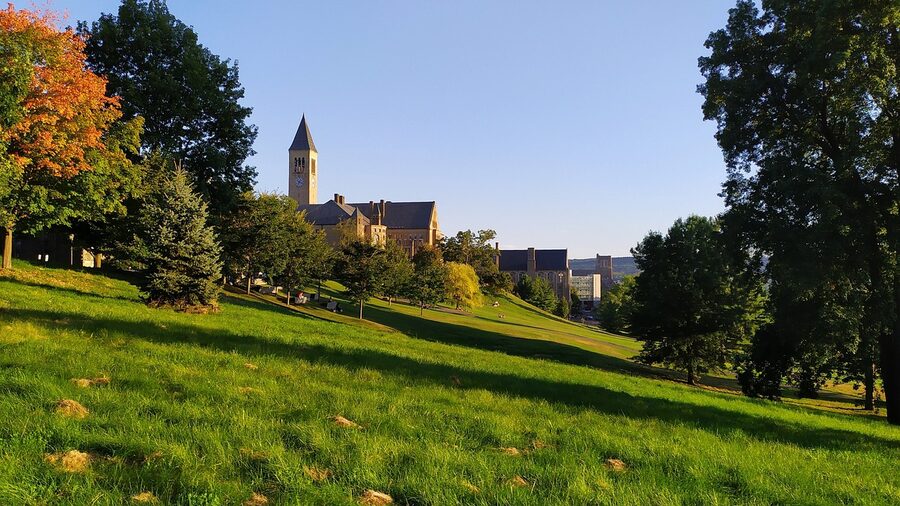
Quick primer because most people show up to the Finger Lakes expecting Napa and getting something different. Cayuga (and the Finger Lakes more broadly) is a cool-climate region. That shapes everything.
Riesling is the flagship. Cool nights, long ripening, slate and limestone soils. The dry styles are mineral and precise; the off-dry and sweet styles are honeyed and built for ageing. If you only buy one bottle on this trip, make it a Riesling.
Cabernet Franc is the red the region grows best. Lighter than Bordeaux Cab Franc, often peppery, sometimes herbaceous. Sheldrake Point and Six Mile Creek both make good ones; Hosmer’s is the third in the trio.
Pinot Noir is increasingly serious in the Finger Lakes. Long Point and a few Cayuga producers do it well; the better Pinots come from Seneca’s west side (Forge in particular), but the Cayuga versions are more affordable.
Cayuga White is the regional hybrid grape, developed at Cornell, that tastes like a slightly tropical pinot grigio. Most Cayuga wineries make a version. Worth tasting once even if you don’t buy a bottle.
Grüner Veltliner at Hosmer is one to seek out; almost nobody else in the region grows it.
Ice wine: real ice wines are made from grapes left to freeze on the vine, harvested in single-digit temperatures, and pressed while still frozen. Some Finger Lakes producers do this properly (Sheldrake Point, Buttonwood Grove). Some “ice wines” sold here are made from frozen-after-harvest fruit, which is technically iced wine and not real ice wine. Ask before paying upcharges.
Tastings on Cayuga run $10 to $20 typically, sometimes with a glass to take home or a credit toward a bottle. Bottle prices are a steal compared to California or Oregon: most reds and Rieslings sit between $18 and $32. If you wanted to bring six bottles home, you can do it for under $200.
What to Skip
There are wineries on the Cayuga trail that show up on every “best of” list because they pay for placement or because they have great PR, but that aren’t actually delivering on the wine. I won’t name them; the situation changes year to year and bad-mouthing producers in print isn’t fair to the small ones who improve. But here’s how to avoid them.
Avoid the wineries with souvenir-shop tasting rooms. If the gift shop is bigger than the bar, the wine is usually weaker than the merchandise. There are two or three of these on Cayuga.
Be sceptical of “wine slushies”. They sell well; they’re not why you came to wine country. If a winery’s headline product is a frozen slushie, it’s probably also a place where the actual wine is sweet to a fault.
Skip the bus tours that visit eight wineries in a day. Three or four is the right number. Past four, you stop tasting carefully, stop asking questions, and start drinking instead of tasting. Operators that promise eight stops are not doing you a favour.
Skip the second tasting at any winery you didn’t love. Move on. Cayuga has 16 wineries on the official trail and others off it; you don’t owe anyone a second flight.
One More Thing About Cornell
If you didn’t know this: Cornell has one of the top viticulture and enology programs in the country. The Cornell College of Agriculture and Life Sciences runs the New York State Agricultural Experiment Station in Geneva (the north end of Seneca Lake), which has been the state’s wine research arm since 1882. The Cayuga White grape that you’ll see at half the wineries on the trail was bred there. So were Traminette, Noiret, and the Geneva varieties.
Most Finger Lakes winemakers under 50 trained at Cornell. The Cayuga Wine Trail itself was organised in 1983, partly with academic support. So the wine your kid’s university is loosely responsible for is what you’ll be tasting all weekend. That’s a decent dinner-table conversation if conversation runs dry.
For a fuller comparison of Cayuga against the other Finger Lakes trails, the complete Cayuga Wine Trail guide covers all 16 wineries in detail. If you’ve done Cayuga and want the bigger, deeper sibling lake next time, see the Seneca Lake Wine Trail guide. The Keuka Lake guide covers where US wine started (Pleasant Valley, 1860; Konstantin Frank, 1962). And the Canandaigua Wine Trail guide is the easy half-day from Rochester if your itinerary takes you that way. The full picture sits in the Finger Lakes wine tours pillar.
Whatever you do, don’t eat at the Statler four nights in a row.
 Travel TipsFall Foliage in the Finger Lakes: When and WhereIf you have driven south on Route 414 in the second-to-last week of October, you already know what this article…
 Wine RegionsSheldrake Point: Cayuga Lake’s Lakefront Tasting RoomThe first time I drove down County Road 153 to Sheldrake Point, I missed the turn. You come around a…
 Travel TipsThings to Do in Canandaigua, NY: A Wine-Country TownYou drove down from Rochester for the gardens. That was the plan. Sonnenberg in the morning, lunch somewhere on Main…