
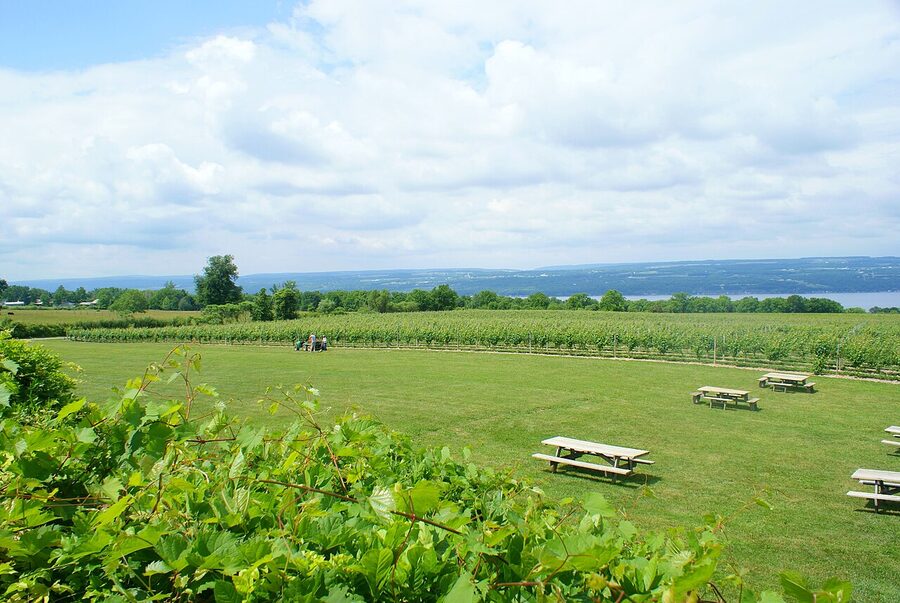

It is a Saturday in late September. I have been on the road since six, the sun has not yet hit the lake, and Watkins Glen is mostly asleep. The marina is empty. The diner on Franklin Street is already pouring coffee. By ten, the first tasting room on the Seneca Lake trail will be open, and by noon I will have the first Riesling of the day in front of me, and the day will go from there.

This is the Finger Lakes. Eleven long, deep, glacier-cut lakes in central New York, around 130 wineries, the most respected Riesling production in North America, and a wine-tour culture that runs from Memorial Day through to Christmas. It is also the most affordable serious wine region in the United States. A tasting that costs $50 in Sonoma costs $20 here. A bottle that costs $60 in Napa costs $25 here. The wines are not “as good for the price”. The top bottles are good, full stop.

This guide is the long version of what I tell friends who want to do a Finger Lakes wine weekend for the first time. It covers the four lakes worth driving to, what each one does best, how to plan the day, when to go, where to sleep, who to hire if you don’t want to drive, and which wineries I send people to first. It will not cover every winery in the region. There are too many. It will give you a real shape for a trip and let you fill in the details from there.


In This Article
- Why The Finger Lakes For Wine
- The Four Lake Wine Trails
- Seneca Lake
- Cayuga Lake
- Keuka Lake
- Canandaigua Lake
- Getting To The Finger Lakes
- When To Go
- How Many Wineries Per Day
- Tour Options
- Driving Yourself
- Hiring A Driver
- Group Bus Tour
- Trolley
- Where To Stay
- Where To Eat
- Wineries That Are Worth A Stop
- Seneca Lake (West Side)
- Seneca Lake (East Side)
- Cayuga Lake
- Keuka Lake
- Practical Tips
Why The Finger Lakes For Wine
Two reasons. The geography and the people who showed up.
The geography first. The Finger Lakes are deep, narrow troughs gouged out by the last ice age. Seneca Lake is over 600 feet deep at its deepest point. Cayuga is over 400. These lakes hold a staggering amount of thermal mass, and they release it slowly through the autumn. The grapes growing on the slopes around the lakes get a longer ripening season than they should at this latitude (the same latitude as northern Italy, southern France) because the lake won’t let the air go cold. Riesling, the great cool-climate white grape, gets the long, slow ripening it needs to push up its sugar without losing its acidity. That is why Finger Lakes Riesling has the screaming citrus and the wet-stone minerality that real Riesling drinkers chase.
Now the people. In 1962 a Ukrainian immigrant named Konstantin Frank, who had been thrown out of two Soviet research positions and was working as a dishwasher, planted vinifera vines (the European wine-grape species) on a slope above Keuka Lake. Everyone told him they would freeze. They did not. Within a decade he was making real Riesling, real Chardonnay, and real Pinot Noir in a part of the country that had been making sweet Concord wine for a hundred and fifty years. Every serious vinifera vineyard in the Finger Lakes today traces its lineage back to that one slope. The current generation of winemakers, people like Hermann Wiemer’s successor Fred Merwarth, the Frank family’s Fred and Meaghan, and Peter Bell at Fox Run, are some of the best in the country at what they do. They will pour for you themselves on a quiet afternoon.
The Four Lake Wine Trails
There are technically eleven Finger Lakes. There are four wine trails worth your weekend: Seneca, Cayuga, Keuka, Canandaigua. Each one has its own personality. Pick one for a first trip. You will not “do” the Finger Lakes in a weekend, no matter what the brochures say.
Seneca Lake
.jpg)
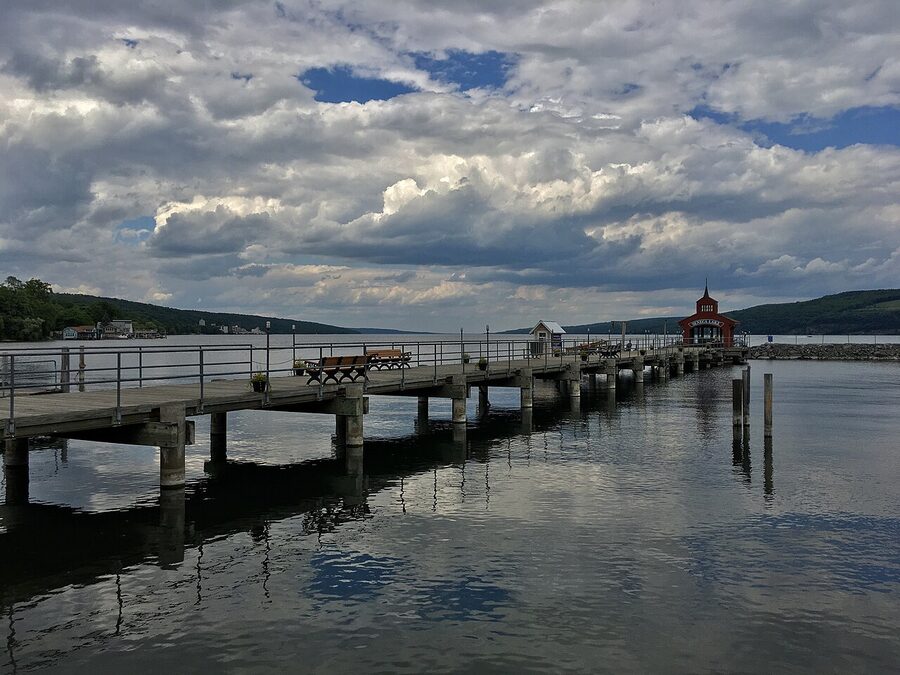
Seneca is the biggest of the lakes, the deepest, and the densest in wineries. Around 35 wineries sit on the slopes above the east and west sides, with concentrations on the western side around Hector and Lodi and on the eastern side around Reading and Burdett. This is the trail to do if you have one weekend and you want the most concentrated, most varied tasting experience. The Seneca Lake Wine Trail is also the most professionally run of the four, with frequent themed weekend events (Pasta and Wine, Chocolate and Wine, the Deck the Halls weekend in December).
If I had to make a Riesling-focused argument for the western side: Hermann J. Wiemer, Boundary Breaks, Forge Cellars, Anthony Road, and Standing Stone are within fifteen minutes of each other and are doing some of the most interesting cool-climate winemaking in North America. The eastern side has Wagner, Lamoreaux Landing, and Atwater, plus Damiani for serious reds. Watkins Glen at the south end is the natural base. Geneva at the north end has more upscale food.
Cayuga Lake
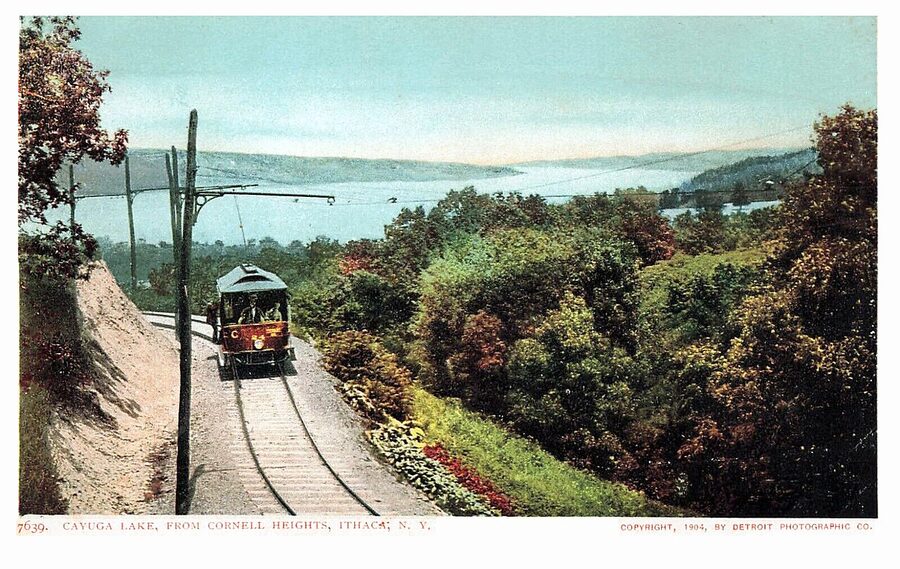

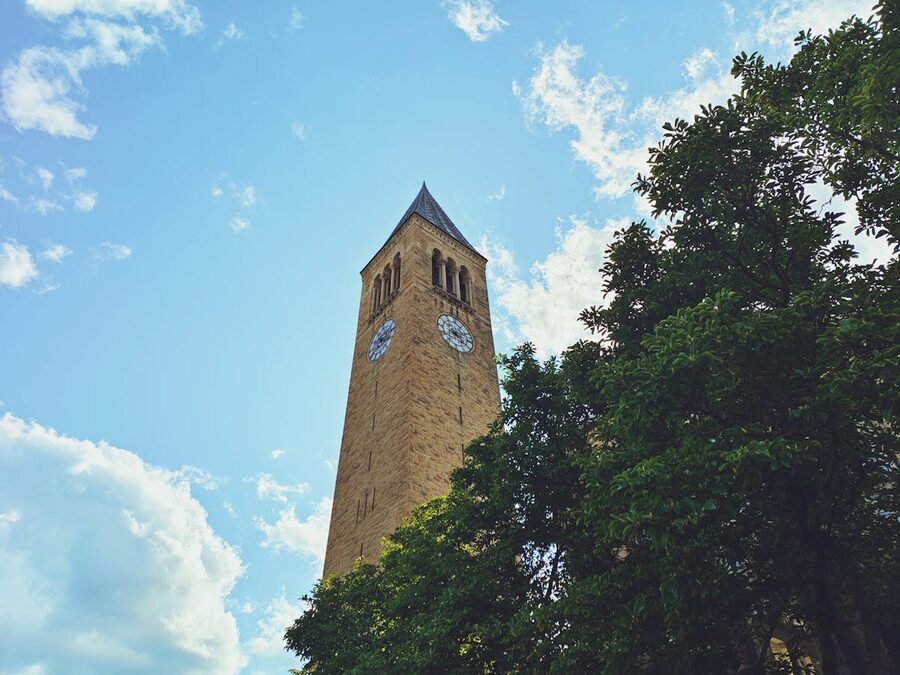
Cayuga is Seneca’s quieter sibling. Around 16 wineries, most clustered on the west side from Ithaca up toward Seneca Falls, with a handful on the east. The trail is older than the Seneca trail (the Cayuga Wine Trail was the first formally organised wine trail in the United States, founded in 1983) and it has a more relaxed, agricultural feel. Less polish, more conversation. If a Seneca Lake tasting on a Saturday in October feels like a tasting in Sonoma, a Cayuga Lake tasting on the same Saturday feels like a tasting at a friend’s farm.
Sheldrake Point is the picks-itself winery for first-timers (right on the lake, lovely tasting room, consistent Rieslings). Hosmer makes some of the most underrated cool-climate Cabernet Franc in the country. Long Point and Treleaven do good things with Pinot Noir. Knapp does serious distilling alongside the wine. The base for a Cayuga weekend is Ithaca, which is also a college town with a strong food scene.
Keuka Lake
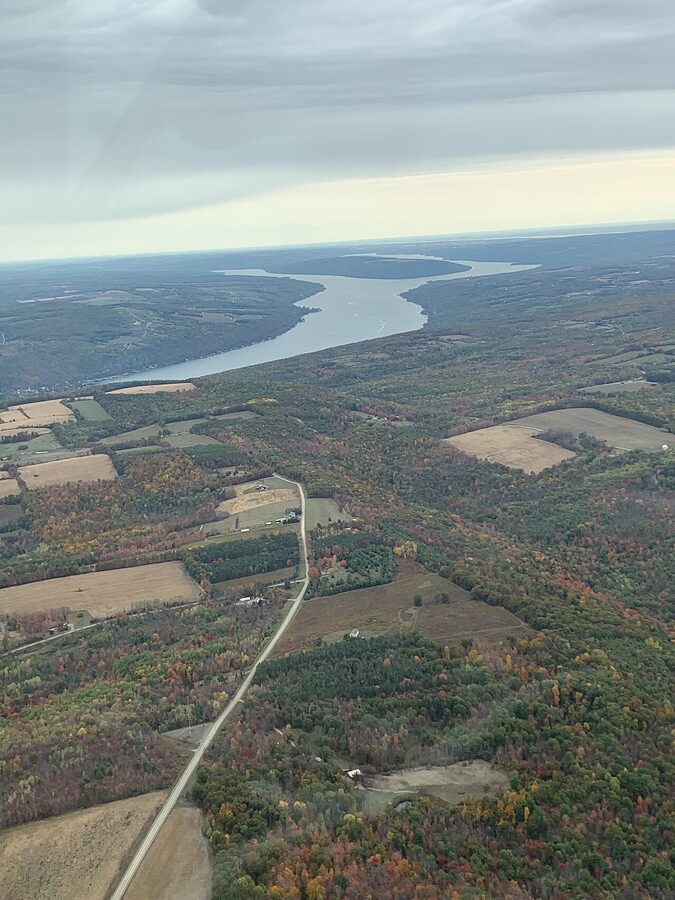

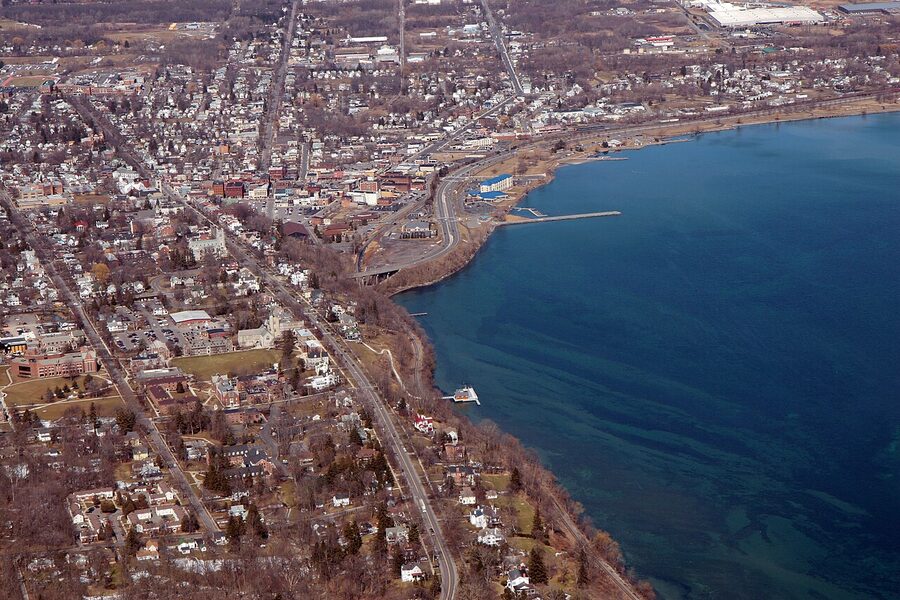
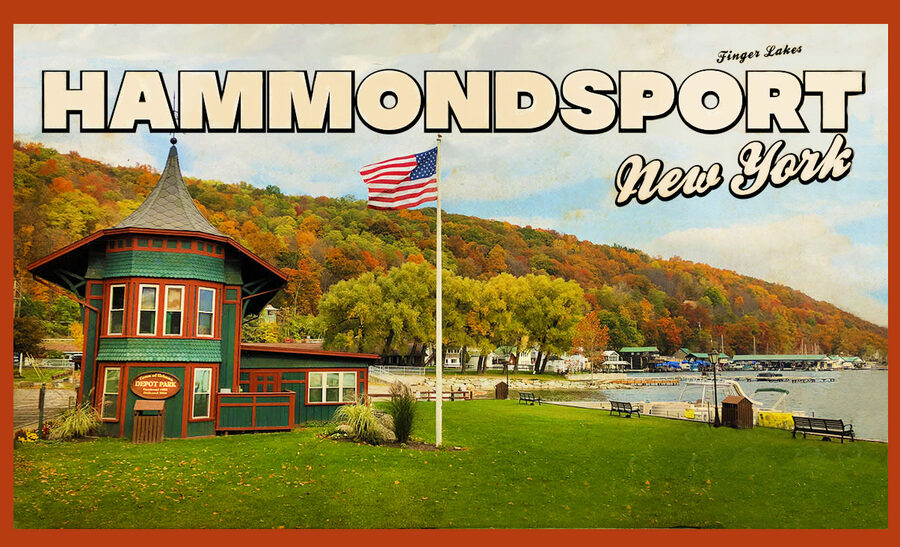
Keuka is the small, beautiful, slightly cult lake. It is the only one of the major four shaped like a Y rather than a finger. Hammondsport at the south end is a single-traffic-light Victorian village with a town square, a small wine museum, and a collection of restaurants that is wildly out of proportion to its population. Around 10 wineries directly on the lake, plus another 10 within a 20-minute drive, including Dr. Konstantin Frank himself.
This is also the cradle of NY wine. Pleasant Valley Wine Company in Hammondsport is the oldest continuously operating winery in the United States (founded 1860, designated US Bonded Winery No. 1). Bully Hill, started by Walter Taylor after he was thrown out of his family’s wine business in the 1970s, is across the road and is one of those places that is more about the personality than the wine. Heron Hill has the best lake view tasting room of any winery in the region. Dr. Konstantin Frank, on the west arm above Keuka, is a pilgrimage for any serious Riesling drinker.
.jpg)

Canandaigua Lake
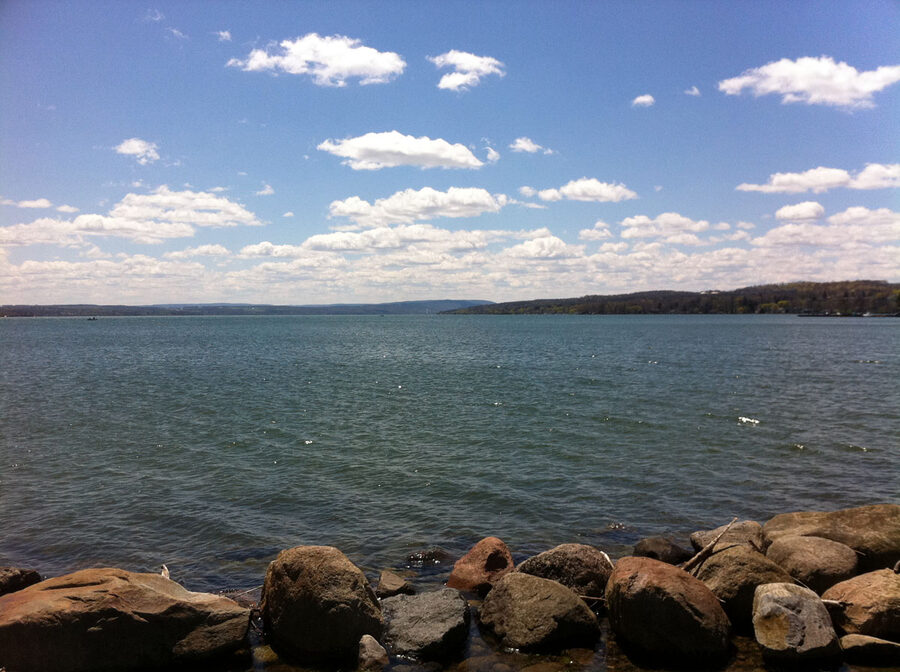

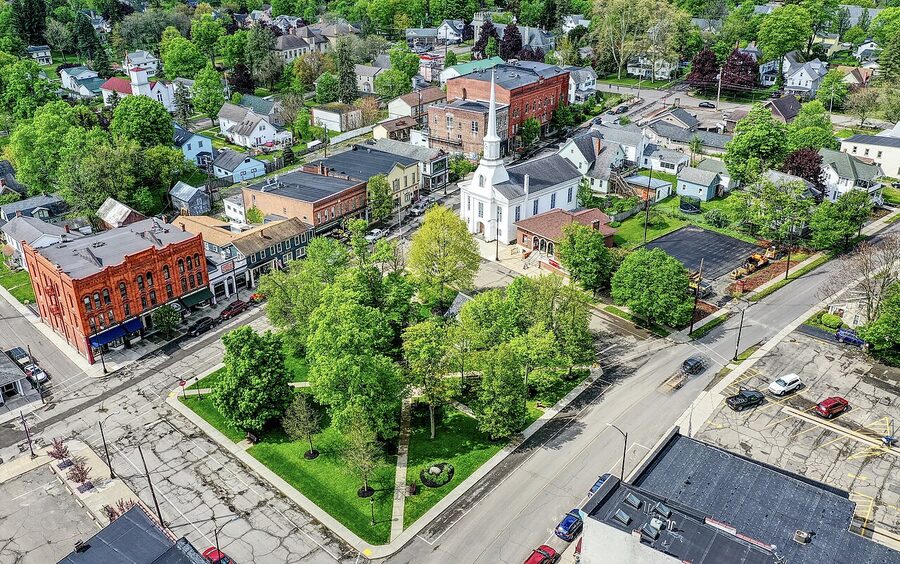
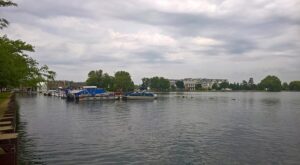
Canandaigua is the smallest of the four trails (around eight wineries on or near the lake, with another fifteen on the broader Canandaigua-area trail) and the most accessible from Rochester or Buffalo. The town of Canandaigua at the north end is bigger and more developed than Hammondsport or Watkins Glen, with a real Main Street and a longer hotel list.
The wineries here are quieter and easier to drop into without a reservation. Heron Hill has a satellite tasting room here. Inspire Moore and Casa Larga are doing interesting things. Canandaigua works best as a half-day add-on to a Seneca trip or as the entirety of a Sunday if you’ve already done two days on Seneca. Do not fly into Rochester to do only Canandaigua; combine it with one of the other lakes.
Getting To The Finger Lakes
The honest answer is: you drive. From New York City the trip is around four and a half to five hours up I-87 and across I-86 to Watkins Glen, or up I-90 to Geneva. From Boston, six. From Philadelphia, four to Hammondsport. From Toronto, three to Geneva.
The closest airports are Rochester (ROC, 50 minutes from Geneva), Syracuse (SYR, 45 minutes from Seneca Falls), and Ithaca-Tompkins (ITH, on Cayuga Lake itself but tiny and expensive). Elmira-Corning (ELM) is the south option, 30 minutes from Watkins Glen and Hammondsport. None of these airports has frequent service. If you fly in, you are renting a car or arranging a pickup.
There is no rail service to any of the wine towns. Greyhound runs to Geneva and Ithaca but not to Watkins Glen, Hammondsport, or Canandaigua. So unless you base yourself in Geneva or Ithaca, you will need wheels. The best move for a long weekend is to fly into Rochester, rent a car, drive south to your base, and spend the weekend.
When To Go

Late September through mid-October is the apex. Fall colours, crush season at the wineries, leaf-peepers feeding the restaurants and B&Bs, and the previous vintage just hitting the tasting bars. Reserve everything six weeks out. Watkins Glen and Hammondsport B&Bs sell out first.
Late May through June is my under-the-radar pick. Vines are leafing out, tasting rooms are quiet, and you can talk for an hour with the winemaker if you walk in on a Tuesday. The lakes are warming up, the weather is unpredictable in a fun way, and rooms cost forty percent less than they will in October. The trade-off is no fall colour and no crush.
July and August are good for everything except wine focus. The lakes are full of boats, the trails are full of bachelorette parties, and the wineries are pouring as fast as they can. The wine is great. The atmosphere is louder than it would be in May.
November through April is shoulder season. Most wineries cut back to Friday-through-Sunday hours. February and March give you ice wine releases at a few wineries (Casa Larga, Knapp, and others around the region run February ice wine weekends). The trade-off is the weather; lake-effect snow is real, and the drive between wineries is no joke when the road is glazed.
How Many Wineries Per Day
Three. Maybe four. Five is too many. I have done five and remembered nothing. The standard tasting flight at a Finger Lakes winery is five wines. Five wineries means twenty-five pours. Even at the modest American measure (about an ounce a pour) that is around eight glasses of wine over the course of a day, before you have eaten anything substantial. You will not enjoy the fifth winery. You will not remember the fourth.
Build the day around three winery stops, one of which is your “anchor” (a place you really want to spend time at), one transit-friendly second, and one walk-in for the late afternoon. Have a long lunch in the middle, on or near the lake. Save the wineries with the best views for late afternoon when the light is right.
Tour Options
Driving Yourself
The cheapest option, the most flexible option, and the one that requires you to either limit yourself to one tasting per stop or have a designated driver in the car. The Seneca Lake trail in particular has long open stretches of highway with serious traffic; the state troopers in Schuyler County are not casual about wine-country DUI enforcement. If you are doing a dedicated tasting day with three wineries, you cannot also be the driver. There is no version of “I’ll just go light” that gets you to legally driving home.
Hiring A Driver
The best option for a couple or a small group. A local car service runs around $60 to $90 per hour, and a six-hour day works out to roughly $100 per person if there are three or four of you. The driver knows the roads, the parking lots, the back routes around the lake when one of the bridges is closed. Crush Beer & Wine Tours, Lakeside Trolley, and Bianconi Tours all run private hires; you can also find local Uber drivers in Watkins Glen and Geneva who do this on the side for less.
Group Bus Tour
The cheapest hands-off option, around $80 to $120 per person for a full day. You don’t pick the wineries. You ride a coach or a school bus with twenty to forty other people. The pace is set by the slowest person. The good ones (Bianconi, Crush, Magnolia) are well-organised and get you to good wineries. The cheap ones bus you to the same three high-volume tasting rooms every weekend. Read the reviews carefully before you book.
Trolley
The Lakeside Trolley out of Watkins Glen runs hop-on/hop-off shared trolleys to a fixed list of wineries on the west side of Seneca Lake. Around $60 a head, you taste at your own pace, and you don’t have to drive. It is genuinely the easiest way to do Seneca Lake on a Saturday in season. The downside is that you are limited to the trolley’s stops, and on busy days the wait at popular wineries to get on the next trolley can stretch.
Where To Stay
.jpg)
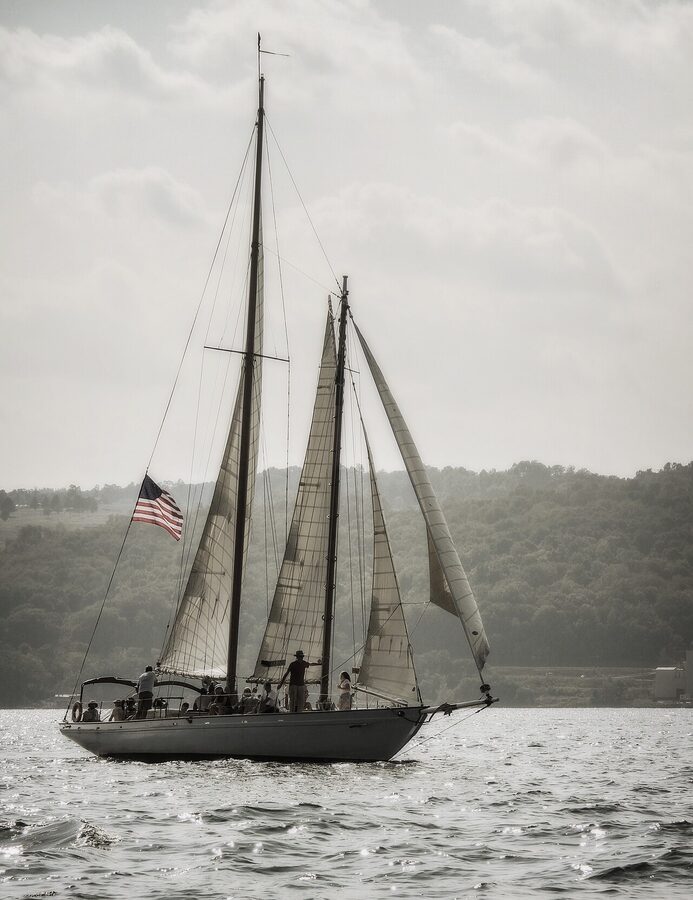
The lodging in the Finger Lakes runs three categories: lake-house Airbnbs, B&Bs, and a thin layer of hotels in the bigger towns. Prices are dramatically cheaper than equivalent properties in Sonoma, and the variety is wider. A typical lakefront B&B in Watkins Glen or Hammondsport runs $150 to $250 a night in season. A boutique hotel like the Watkins Glen Harbor Hotel runs $200 to $320. Lake-house Airbnbs go from $250 a night for a basic two-bedroom up to $700 for the showy ones.
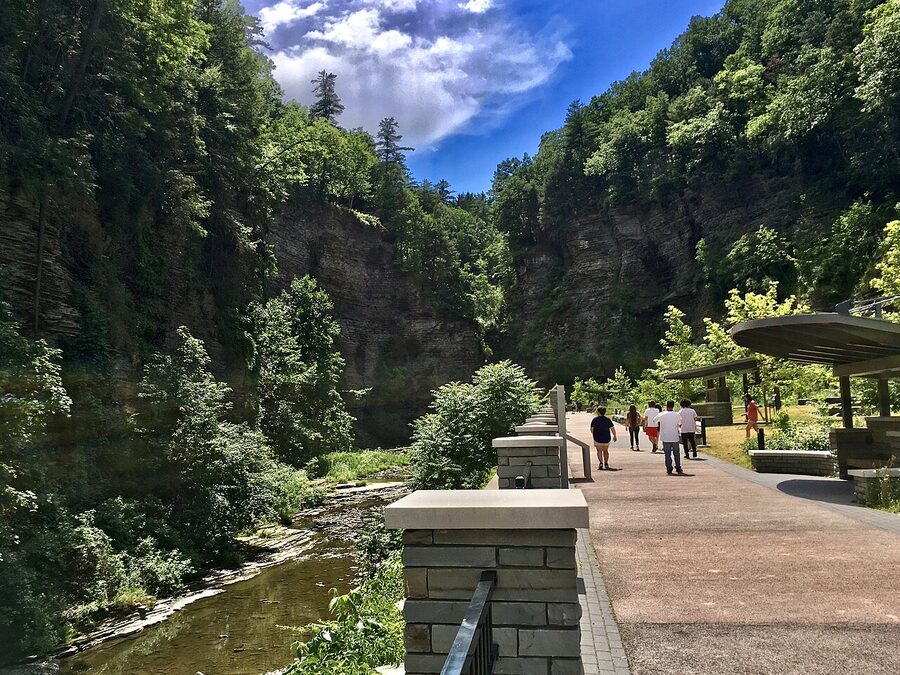
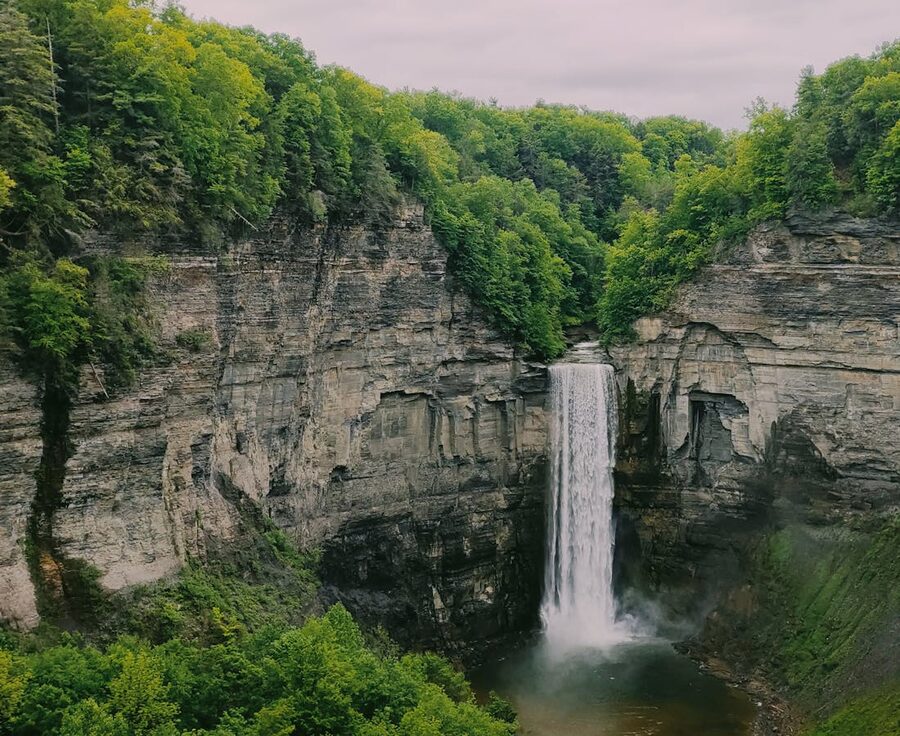
Best base for a first trip: Watkins Glen, on Seneca. The town is small enough to walk, sits at the south end of the densest wine trail, and has the gorge in walking distance. The Watkins Glen Harbor Hotel is the easy choice for hotels; the Idlwilde Inn for B&Bs.
Best base for a quieter trip: Hammondsport, on Keuka. Walkable, beautiful, and you can leave the car parked all weekend if you stay in town and take a driver out to the wineries.
Best base for a long weekend with food at the centre: Geneva, on Seneca’s north end. The Belhurst Castle and the Inns of Aurora are the upscale picks; the Hampton Inn covers the budget end. Geneva also has the strongest restaurant scene of the wine towns.
I keep an updated list of the best inns and B&Bs in the region in the Where To Stay section. For broader hotel searches across the region, Booking has the largest pool of Finger Lakes properties and lets you filter by lake.
Where To Eat
The food scene in the Finger Lakes has moved up dramatically in the last decade. The standout is Stonecat Cafe in Hector, on the west side of Seneca, which has been doing serious farm-to-table since before the phrase was a cliche. Dano’s Heuriger on Seneca is an Austrian-style inn-restaurant that pairs well with a tasting day. Suzanne in Lodi makes a ragù that is one of the best things you will eat in NY wine country.
In Hammondsport, the Village Tavern is the locals-and-tourists hybrid that always works. Lakeside Restaurant has the lake view. In Ithaca, Moosewood (yes, that Moosewood) is the obvious historic stop, and Ithaca Bakery on Cayuga Street will set you up for the day’s wine drives. In Geneva, Kindred Fare is the upscale standout and Ports Cafe has lake views and a real wine list.
One thing the Finger Lakes does badly: dinner reservations after 8 pm. Most kitchens close by 9. Plan accordingly, especially in Hammondsport.
Wineries That Are Worth A Stop
This is opinionated. Skip the ones I don’t list. Most of them are fine; these are the ones I would put on a first-timer’s itinerary.
Seneca Lake (West Side)
Hermann J. Wiemer. The single most important Riesling producer in the Finger Lakes. Walk-ins welcome on weekdays, reserved tastings on weekends. The Magdalena Riesling and the Reserve Dry are the two to focus on. Spend an hour.
Forge Cellars. Started by the Wiemer team plus a Rhone-trained French winemaker in 2011, and now arguably the most exciting cellar on the lake. Single-vineyard Rieslings and a Pinot Noir program that almost no one is talking about yet. Reservations required.
Boundary Breaks. A Riesling-only producer working with about a dozen different Riesling clones. The tasting flight here will teach you more about the grape in an hour than reading any book. Casual, walk-in friendly.
Anthony Road. The Martini family has been here since the 1970s and the Trockenbeerenauslese is one of the great desert wines made in America.
Seneca Lake (East Side)
Wagner Vineyards. The big, polished, full-experience winery on the east side. Has its own brewery and a restaurant on site. Touristy, but the wines are good and the deck overlooking the lake is the right place to end an east-side afternoon.
Damiani Wine Cellars. The east-side red specialist. The Cabernet Franc is the bottle to take home. Friendly, low-key, often the winemaker pouring.
Lamoreaux Landing. Beautiful tasting room (LEED-certified, modernist building above the lake), serious Riesling and Cabernet Franc, civilised tasting fee.
Cayuga Lake
Hosmer Winery. Cabernet Franc that does not get talked about enough. Sit on the patio in good weather.
Sheldrake Point Winery. Right on the lake at the end of a drive that feels much longer than it is. The Riesling is consistently good. The dry rosé is the bottle to drink immediately, in summer, by the water.
Treleaven by King Ferry. Pinot Noir and Chardonnay focused, in the cool middle stretch of the lake. Quiet, friendly, the kind of place you stay longer than you planned.
Keuka Lake
Dr. Konstantin Frank. The pilgrimage. Ridiculous views from the tasting room over the west arm. Try the Rkatsiteli (a Georgian grape, the family is Ukrainian, the vines have been in the soil for sixty years) alongside the Riesling. Reservations a good idea on weekends.
Heron Hill. Best tasting-room view of any winery in the region; the building sits high on a slope above the lake. Solid, friendly, easy to enjoy.
Hunt Country Vineyards. Family-run since the 1970s. The dry Riesling is excellent and the Cayuga White is the ringer that gets sneered at by wine snobs and loved by everyone who actually drinks it.
Pleasant Valley Wine Company. Worth a visit for the history alone. The 1860s buildings are still in active use and US Bonded Winery No. 1 is stamped on every bottle.

Practical Tips
Take cash for tasting fees that surprise you. Most wineries take cards but the small ones occasionally don’t, and the small ones are often the ones you want to taste at.
Drink water between wineries. The Finger Lakes wineries pour bigger than they admit, and the alcohol in dry Riesling is no joke (12.5 to 13.5 percent on most labels). A bottle of water in the car between stops will save you an evening.
Buy at the winery. The pricing is the same as the bottle shop in town, and most cellars will throw in a free taste of something they have open if you walk out with a case. Some of the very best bottles are only sold at the cellar door.
Use the trail websites for hours. Almost every winery now requires reservations on Saturdays in season. The Seneca Lake Wine Trail and the Cayuga Wine Trail sites have the most current info.
Pack layers. The lakes generate their own weather. A 75-degree morning at Watkins Glen can be a 60-degree afternoon at the north end of the lake, and the wind off Cayuga in October has its own opinions.
If you are flying out the morning after a tasting day, allow yourself an extra hour for the drive. The roads around the lake are curvy and the headache from a third Riesling pour you should not have had will catch up to you when you have to read road signs at speed.
That is the shape of a Finger Lakes wine trip. The full overview of all five NY wine regions is on the homepage, and I’m slowly building out region-specific guides for all of them. If you want a recommendation tailored to your own dates, the contact page is open.
Bring a friend who likes Riesling. Drive carefully. Tip the tasting-room staff. The Finger Lakes will be there for you the next weekend too.
 Travel TipsFall Foliage in the Finger Lakes: When and WhereIf you have driven south on Route 414 in the second-to-last week of October, you already know what this article…
 Wine RegionsSheldrake Point: Cayuga Lake’s Lakefront Tasting RoomThe first time I drove down County Road 153 to Sheldrake Point, I missed the turn. You come around a…
 Travel TipsThings to Do in Canandaigua, NY: A Wine-Country TownYou drove down from Rochester for the gardens. That was the plan. Sonnenberg in the morning, lunch somewhere on Main…