
The campers I know who have figured out the Finger Lakes do roughly the same thing every June. They book Watkins Glen State Park six months out, drive in on a Friday with a pop-up or a tent, and spend the next two days alternating between gorge trails, lake swims, and tasting rooms that charge $5 for five pours of Riesling. The whole weekend costs less than one Saturday night at a Geneva hotel.
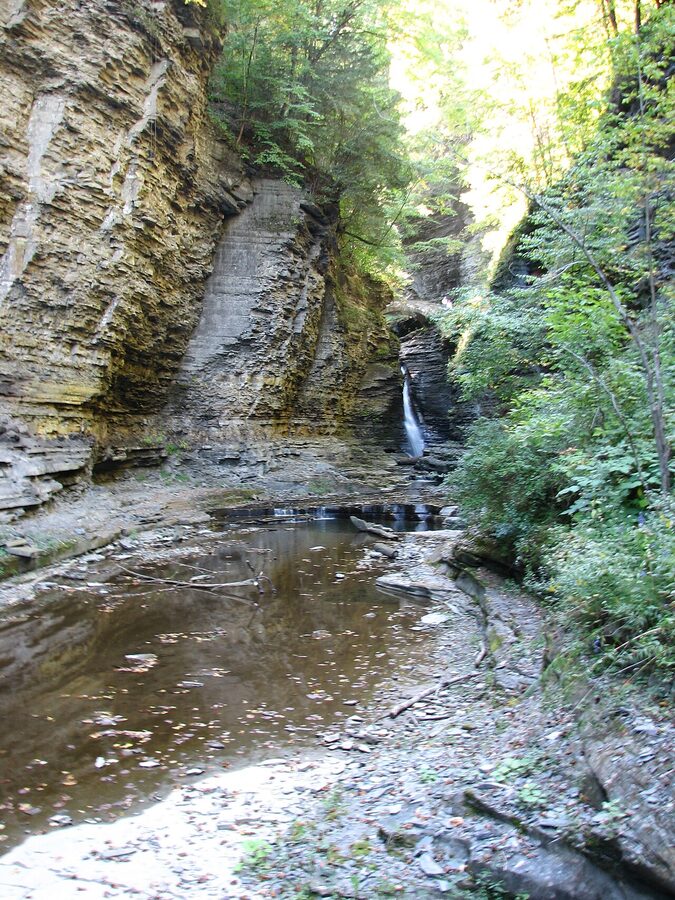
That weekend is what this guide is about. Where to pitch a tent, which campgrounds book up first, what each one costs, and which wineries are within fifteen minutes of your tent flap so you can drink without driving back across the lake. I’ll skip the campgrounds I would not stay at again, and I’ll tell you the difference between the parks that take real reservations on the New York State system and the private ones that need a phone call in March.
In a Hurry?
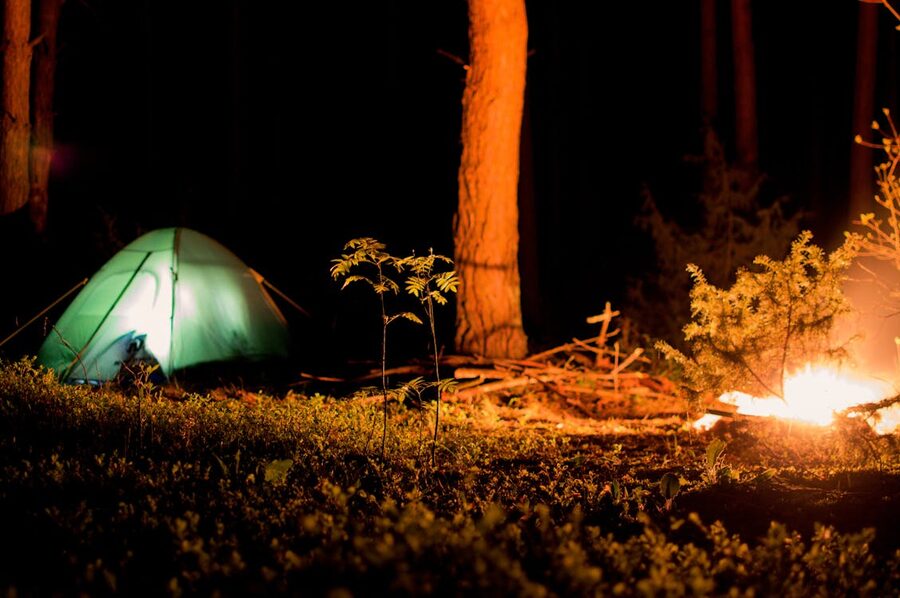
The two campgrounds I send first-timers to, plus the wine tour to book if you want to drink without driving:
- Watkins Glen State Park campground ($18-$30/night, May 8 – Oct 12, 2026): the gateway. Book through Reserve America the day reservations open for your dates, eleven months out.
- Sampson State Park campground ($17-$24/night, May 15 – Oct 12): bigger, easier to get into, on the east shore of Seneca Lake with Wagner and Atwater wineries within ten minutes.
- A pickup wine tour from your campground: lets you taste at five wineries without driving back. Best two below.
Reserve a State Park Site
Wine Tour on Viator
Browse Tours on GetYourGuide
In This Article
- How camping in the Finger Lakes actually works
- Watkins Glen State Park: the gateway
- Wineries within fifteen minutes
- Booking strategy
- Sampson State Park: the easier alternative on Seneca
- Wineries within fifteen minutes
- Cayuga Lake State Park: the central-coast option
- Wineries within fifteen minutes
- Keuka Lake State Park: smaller, quieter, west-arm Riesling
- Wineries within fifteen minutes
- Taughannock Falls State Park: cabins above Cayuga
- Wineries within fifteen minutes
- Robert H. Treman and Buttermilk Falls: Ithaca-base camping
- Stony Brook State Park: small and quiet, near Naples
- The free option: Finger Lakes National Forest
- Honeoye Lake and Conesus: the small-lake escape
- Private campgrounds and KOA: when state sites are full
- Glamping and cabins: when you want indoor plumbing
- Season notes: when to camp, what to expect
- The packing-down list nobody tells you
- The pickup wine-tour question
- A blunt verdict on each park
How camping in the Finger Lakes actually works
The state runs the most desirable campgrounds. Reservations open eleven months in advance via the New York State Parks Reserve America system, and the prime weekends at Watkins Glen and Taughannock Falls fill within hours of opening. If you want a holiday weekend at a marquee park, you set a calendar reminder for the day exactly eleven months prior, and you’re online at 9am Eastern when the system flips over.
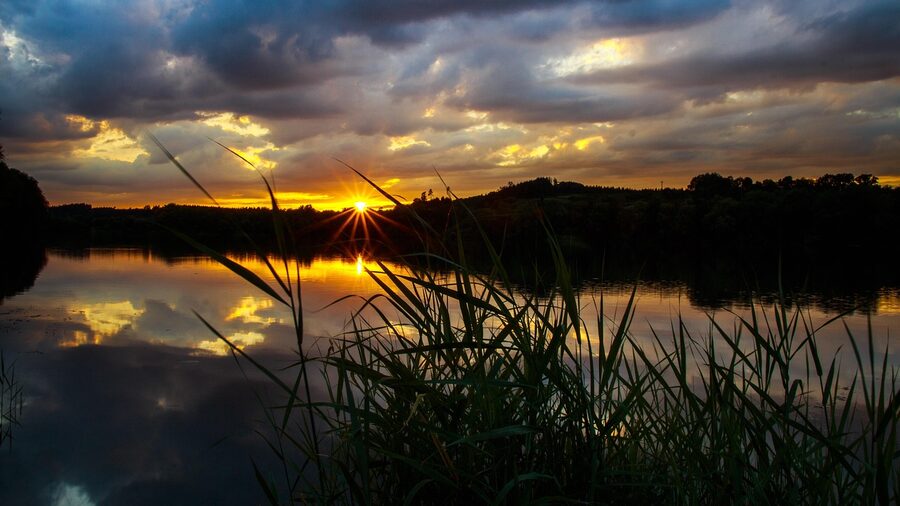
The off-peak rules are gentler. May, early June, September, and October all have midweek availability if you’re flexible. Out-of-state campers pay an extra $5 per night across most parks. Reservation fees are $7 on top of the nightly rate, charged once per booking. Cabins typically have a 2-night minimum outside high summer and a Saturday-to-Saturday weekly requirement during peak season, usually late June through late August.
The state campground season runs roughly mid-May to mid-October. A handful of the wine-country parks are tighter than that. The private and KOA options stretch the season at both ends, and a few stay open year-round if you have a hard-side trailer or RV. Tent camping in October is real but cold; daytime in the 50s, nighttime sometimes near freezing. Bring a 20-degree bag and you’ll be fine.
Watkins Glen State Park: the gateway
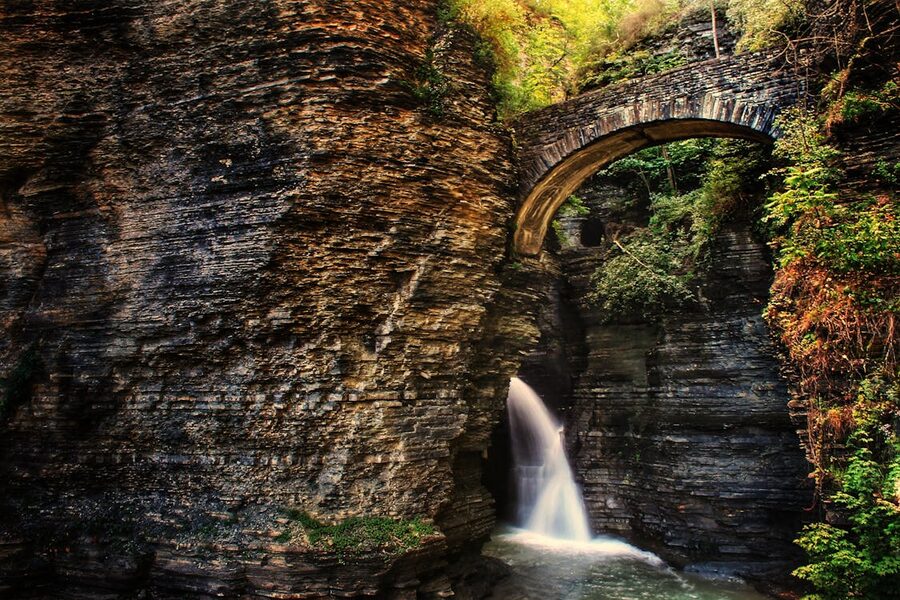
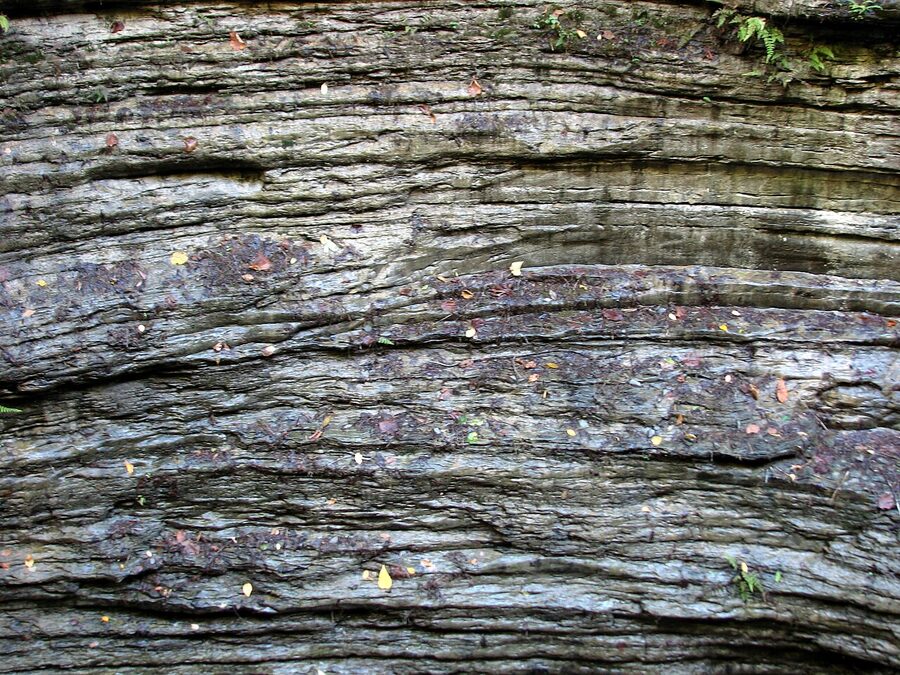
This is the one. The campground sits inside the park at the upper entrance off Route 409, with 305 sites split between tent, electric, and a small cabin loop. You walk to the gorge trailhead. You walk to the swimming pool that opens June 27 in 2026. You’re a four-minute drive from Franklin Street downtown, where you can eat at the Stonecat Cafe satellite or the Wildflower Cafe and walk back without a designated driver.
2026 rates: tent and basic sites $18-$30 per night, rustic cabins $58 base (3-night minimum), $5 out-of-state surcharge, $7 reservation fee. Pool open June 27 through September 7. The famous Gorge Trail typically opens mid-to-late May and closes the last weekend of October. If you camp before mid-May or after late October, you get the campground for cheap and you walk the rim trails instead, which are open year-round and arguably more atmospheric in a November fog.
Wineries within fifteen minutes
The south end of Seneca Lake from Watkins Glen is your tasting playground. Lakewood Vineyards, Glenora Wine Cellars, and Castel Grisch Estate are all on Route 14 north of town. Hazlitt 1852 is a longer ten miles up the east shore but worth the drive for the Red Cat. The serious west-side stops, including Forge Cellars (which I genuinely love and would camp here just to drink), Hermann J. Wiemer in Dundee, and Damiani Wine Cellars on the east shore, are all within thirty minutes. The full west-side trail is laid out in the Seneca Lake Wine Trail itinerary and the east-side stops are detailed in east-side vs west-side picks if you’re trying to plan two tasting days from the same campsite.
One thing I’ll be blunt about. Driving back to camp after a six-stop tasting day is a bad idea, even at the spit-bucket pace of professionals. Either book a pickup tour (covered below), do a smaller two-stop afternoon and walk back into Watkins Glen for dinner, or have one camper stay sober for the day. Local sheriffs do enforcement on the Route 14 corridor.
Booking strategy
Eleven months out, Friday-to-Sunday slots in late June through August disappear in the first hour. The trick: target a Sunday-through-Tuesday or Wednesday-through-Friday block. You’ll get your pick. The pool is just as open. The wineries are less crowded. Saturday warriors can have their Saturdays.
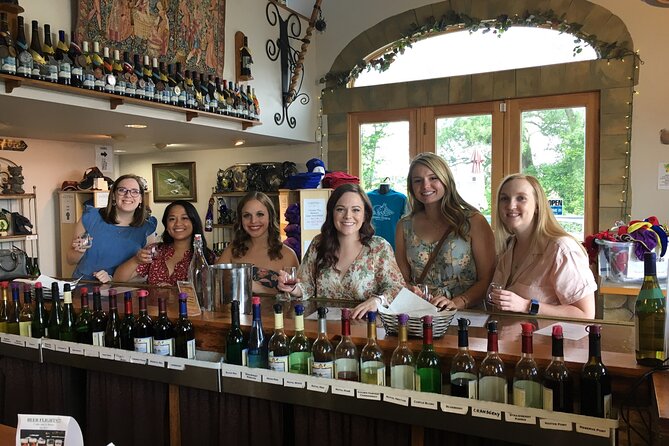
Seneca Lake South Wine Tasting Tour
The fix for camping at Watkins Glen and wanting to taste at five wineries on a Saturday. They pick you up at the Harbor Hotel (a five-minute walk from the campground), drive a small group around the south end of Seneca, and drop you back. Skip if you’re under three people or want a custom route; the tour visits set wineries.
Sampson State Park: the easier alternative on Seneca
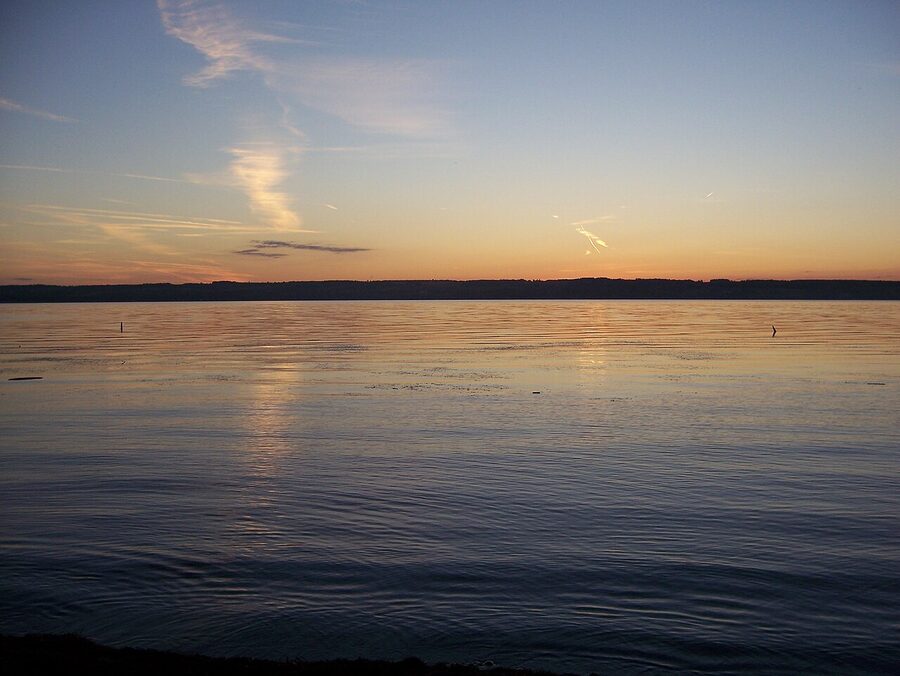
Sampson is the second pick if Watkins Glen is full, and for a lot of people it’s the better pick. It’s on the east shore of Seneca, about thirty minutes north of Watkins Glen by car. There are 245 campsites across multiple loops, plus log cabins and seasonal sites operated by Seneca Lake Resorts. The vibe is a little more family-camping, a little less hiker, and the campground has its own marina and beach.
2026 rates: campsites $17 base plus $7 electric per night, $5 out-of-state, $4 weekend/holiday surcharge, $7 reservation fee. The camping season runs May 15 through October 12, with a closure September 21-30 for the regional dog show. Cabins are operated by Seneca Lake Resorts (315-651-4949), not the state, so you book those separately.
Wineries within fifteen minutes
Sampson is on the east-side trail. Wagner Vineyards is ten minutes south, and the Wagner Brewery and Ginny Lee restaurant are at the same complex, which is useful for a non-driving evening. Atwater Estate Vineyards, Hazlitt 1852, Lamoreaux Landing, and Standing Stone are all within twenty minutes. The full sweep of the east-side wineries is covered in our east vs west breakdown.
If you want to do both ends, Sampson works because Watkins Glen is also reachable in thirty minutes for the gorge trails. You’re not as park-walkable as the Watkins Glen campground itself, but you trade gorge access for a real lakefront site. Sampson sites near loops 4 and 5 have direct lake views. Tell Reserve America you want lakeside; the website lets you filter.
Cayuga Lake State Park: the central-coast option
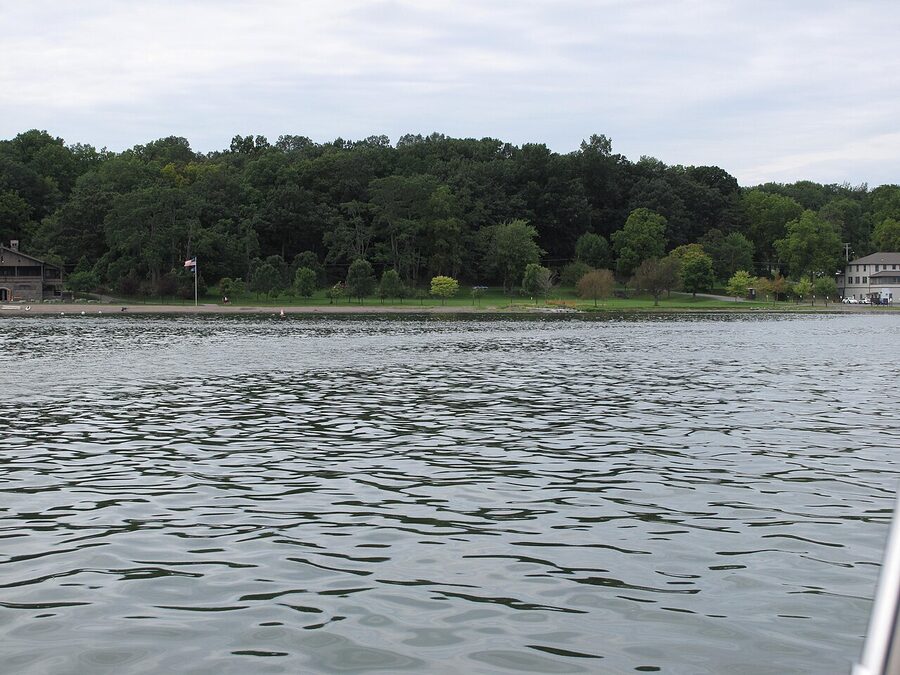
Cayuga Lake State Park is the underrated middle ground. It’s at the north end of Cayuga Lake, just outside Seneca Falls, with 286 campsites on a wooded plateau above the water. The park has a sandy swimming beach, a boat launch, and a short trail down to the lake. The campground is quieter than Watkins Glen and easier to book on short notice.
2026 rates: $17-$24 per night, $5 out-of-state surcharge, $7 reservation fee. The camping season runs May 16 through October 13, and the park collects a day-use vehicle fee of $7 on weekends from late May through Labor Day plus daily collection from June 21 to September 1. Cabins available by the night or week (weekly $210-$428).
Wineries within fifteen minutes
The north end of Cayuga Lake is winery-light compared to the west shore concentration south of Lansing. From Cayuga Lake State Park you’re closest to Knapp Winery, Goose Watch (great for a daytime visit on the lake), and Swedish Hill, all within twenty minutes south on Route 89. For the full Cayuga loop including Sheldrake Point, Hosmer, and Long Point on the west shore, see the Cayuga Wine Trail itinerary; those are all 25-40 minutes from the campground.
The campground’s bigger draw is location flexibility. From here you can do an east-side Seneca Lake day, a Cayuga west-side day, or drive into Skaneateles in forty minutes. It’s the only Finger Lakes campground I’d call a true regional base.
Keuka Lake State Park: smaller, quieter, west-arm Riesling
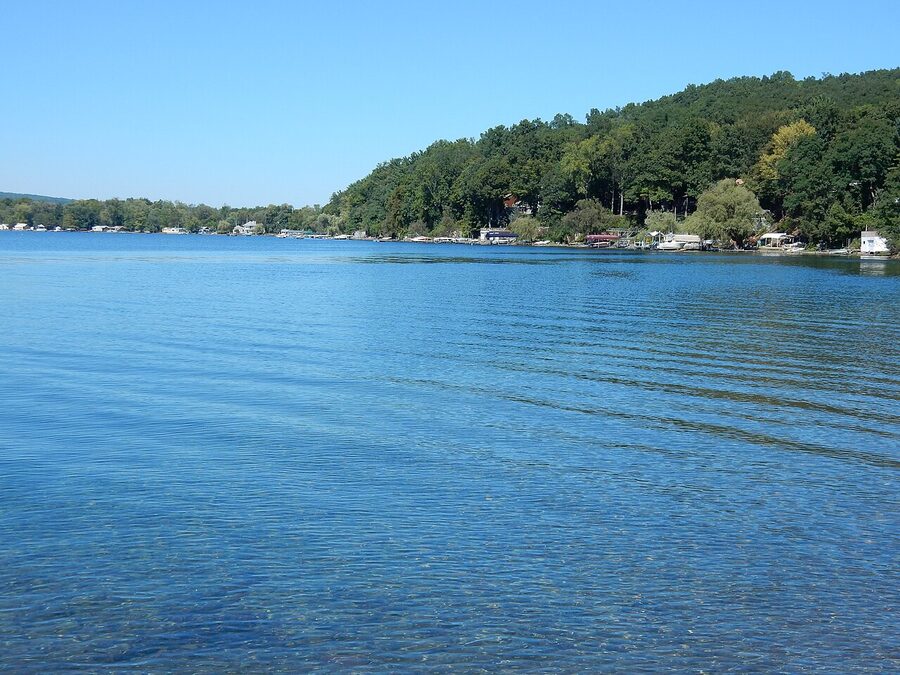
This is the small one. About 150 tent and trailer sites, 53 with electric hookups, perched on a steep hillside above Keuka’s western branch. There are showers, a marina, a boat launch, and a short trail down to the water. Keuka itself is the pretty Y-shaped lake, smaller and shallower than Seneca, and the Keuka Lake Wine Trail is one of the originals. Bully Hill, Heron Hill, and Dr. Konstantin Frank are all within fifteen minutes of the campground.
2026 rates: $24-$36 per night, $5 out-of-state, $7 reservation fee. Vehicle entry $8 in season. Camping season May 16 through October 12. Boats and trailers are not allowed on individual campsites; trailer storage is in the marina overflow lot. The park has 50-amp electric only at certain sites, so if you have a big rig double-check the site type before booking.
Wineries within fifteen minutes
This is the cluster. Dr. Konstantin Frank is six minutes uphill, the historic vinifera winery, with the Rkatsiteli and the Pinot Noir worth the drive alone. Heron Hill, with the famous deck view, is also six minutes. Bully Hill is a personality-first stop ten minutes south in Hammondsport. Keuka Spring is on the east shore, twenty minutes around. Pleasant Valley Wine Co. (the original US Bonded Winery No. 1) is in Hammondsport, fifteen minutes via the lake’s south end. The full loop with timing is in the Keuka Lake Wine Trail guide.
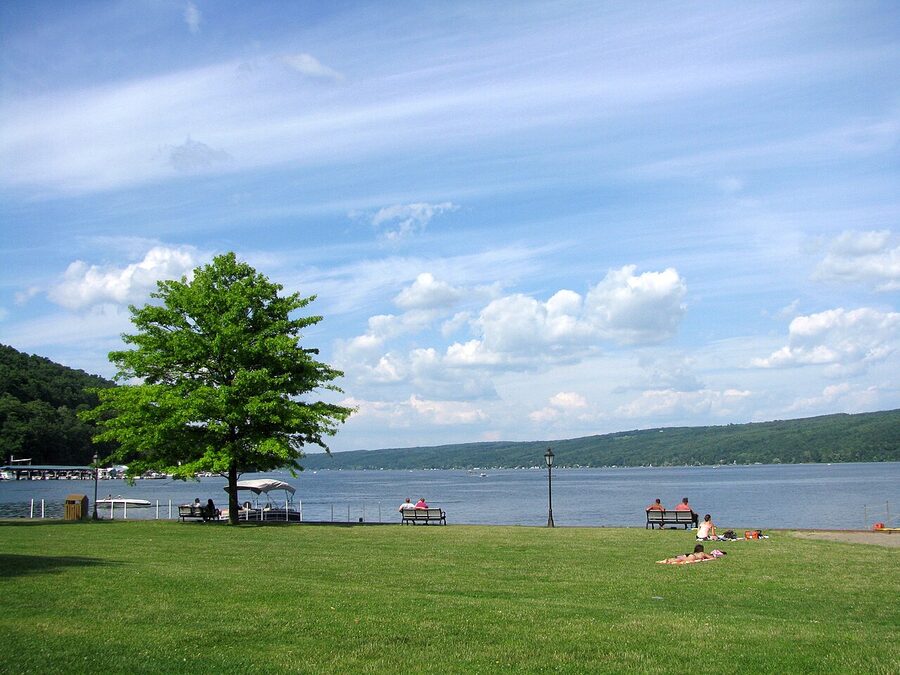
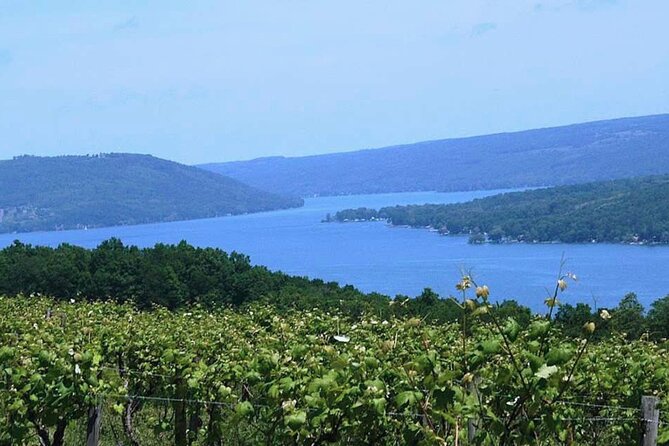
Picturesque Wine-Tasting around Keuka Lake
Pickup from Penn Yan, which is a fifteen-minute drive from Keuka Lake State Park. They route Keuka’s west shore plus a Hammondsport stop, hitting Dr. Frank, Heron Hill, and a smaller producer or two. Best for solo or two-person travelers who want the no-driving day; if you have four-plus people, hire a private car instead and pick your own route.
Taughannock Falls State Park: cabins above Cayuga
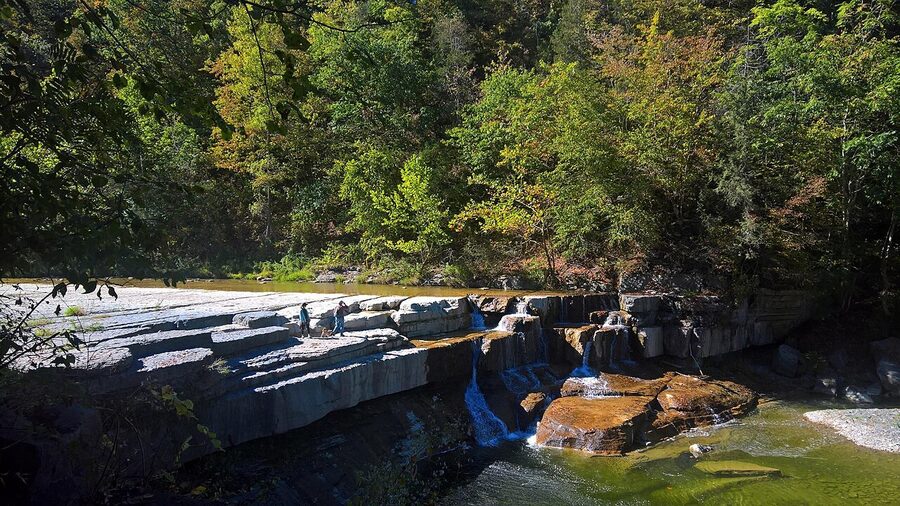
Taughannock has a different proposition. The campground is small and the cabins are the draw. There are 76 campsites and 16 cabins, and the cabins on Tioga Loop sit a hundred yards from the lake with a screened porch each. They’re the most-booked cabins in the system; reservations open eleven months out and the prime weeks go in the first thirty minutes.
2026 rates: campsites $20-$27/night, cabins from $59/night. Cabin rentals are 2-night minimum from May 15 to June 26 and again from August 29 to October 12; during the prime season (June 27 to August 28), cabins are Saturday-to-Saturday with a 7-night minimum. $5 out-of-state surcharge, $7 reservation fee. Camping season May 15 through October 12.
One thing to know: the campground is technically on Cayuga’s west shore but a few miles north of the main winery cluster. Taughannock’s draw is the falls (a 215-foot plunge, taller than Niagara on a single drop) and the proximity to Trumansburg, a small town with the Hazelnut Kitchen and a perfectly good Saturday morning farmers market.
Wineries within fifteen minutes
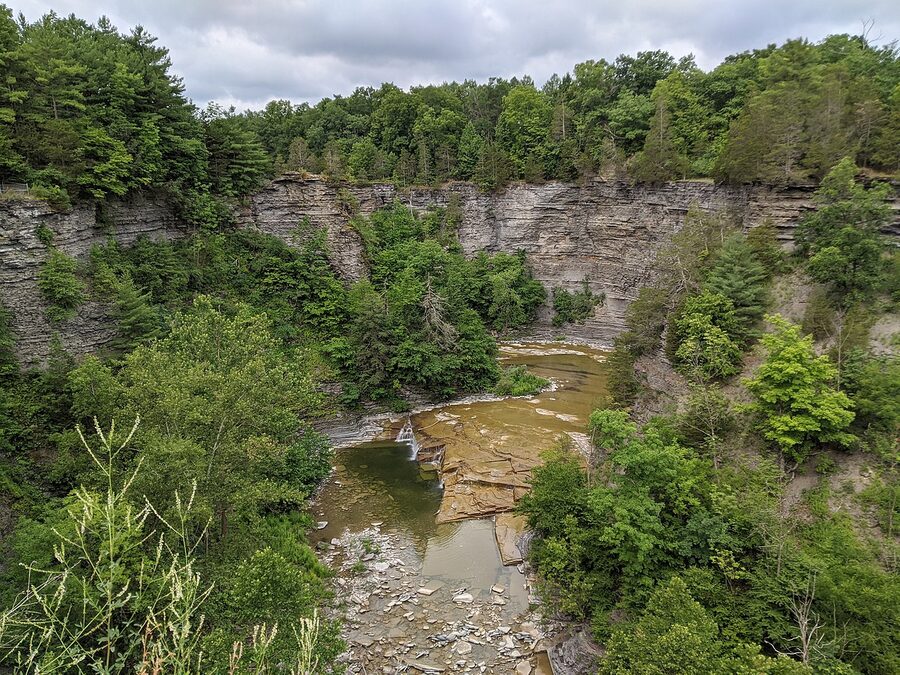
Drive south on Route 89 for fifteen minutes and you hit Sheldrake Point Winery (the literal-on-the-water tasting room I love), Hosmer (the Cab Franc), and Long Point Winery. Lucas Vineyards is also within twenty minutes. Twenty more minutes south gets you into Ithaca proper, and Ithaca is where the food problem solves itself. Hazelnut Kitchen, Northstar House, and a dozen brewery taps. The Ithaca wine tours guide covers the route from Cornell south, which works in reverse from the campground.
Robert H. Treman and Buttermilk Falls: Ithaca-base camping
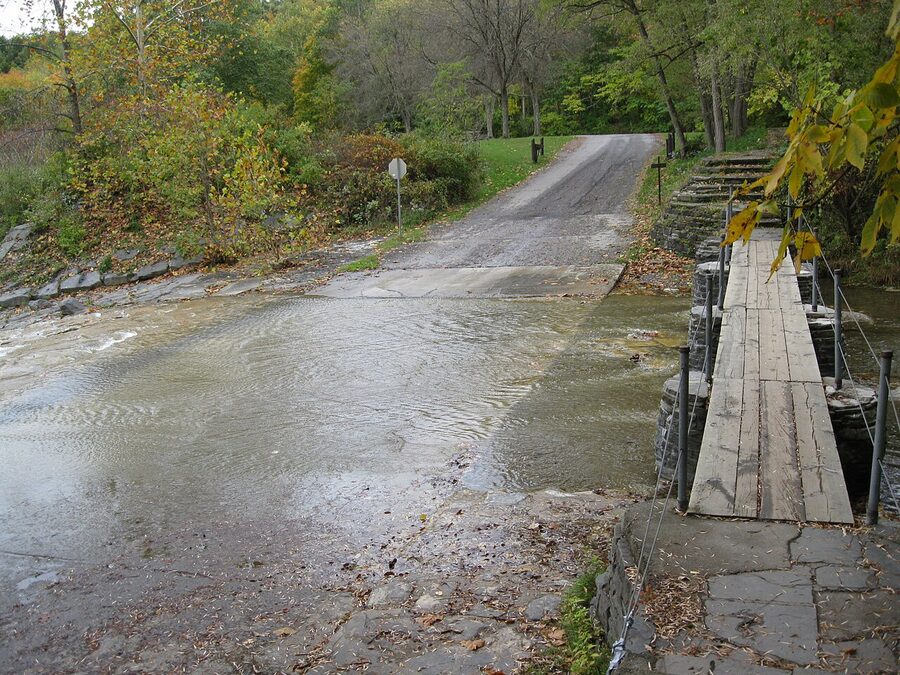
If your priority is gorge-walking and you want an Ithaca base, Robert H. Treman and Buttermilk Falls are your two picks. Both are under fifteen minutes from downtown Ithaca and both have full campgrounds.
Treman has 72 campsites and 14 cabins. The Lower Falls swimming hole at the base of the gorge is one of the few state-park swims you can do under a real waterfall. Buttermilk Falls is smaller (60 sites) and slightly closer to Ithaca, with the namesake falls two minutes from the campground.
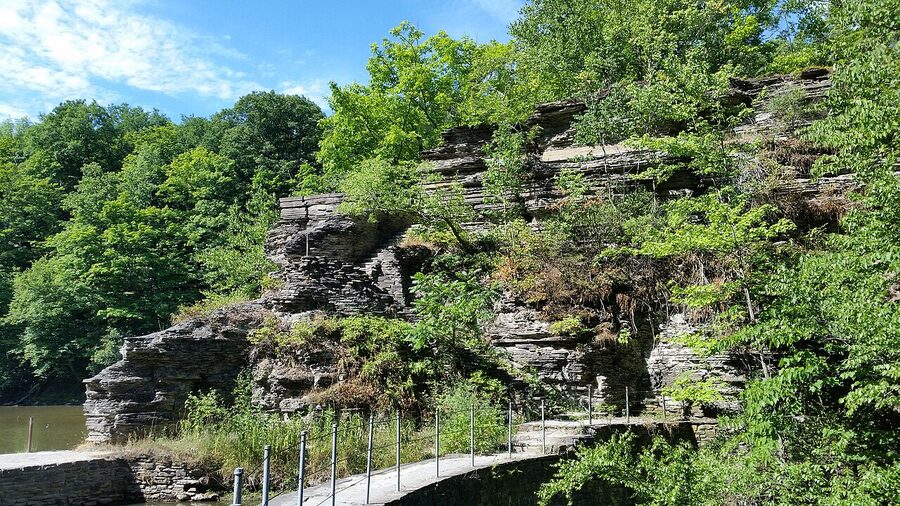
Both run roughly $20-$27 per night for tent sites. Cabins from $59. Same May-mid-October season. The wineries are 20-30 minutes north up Route 89 along Cayuga’s west shore. The Cayuga Wine Trail itinerary works just fine as a day trip from either base. The trade-off versus a north-of-Cayuga base like Taughannock or Cayuga Lake State Park is that you get full Ithaca walking access (Cornell, the Commons, the gorges) but you’re further from Seneca Lake.
Stony Brook State Park: small and quiet, near Naples
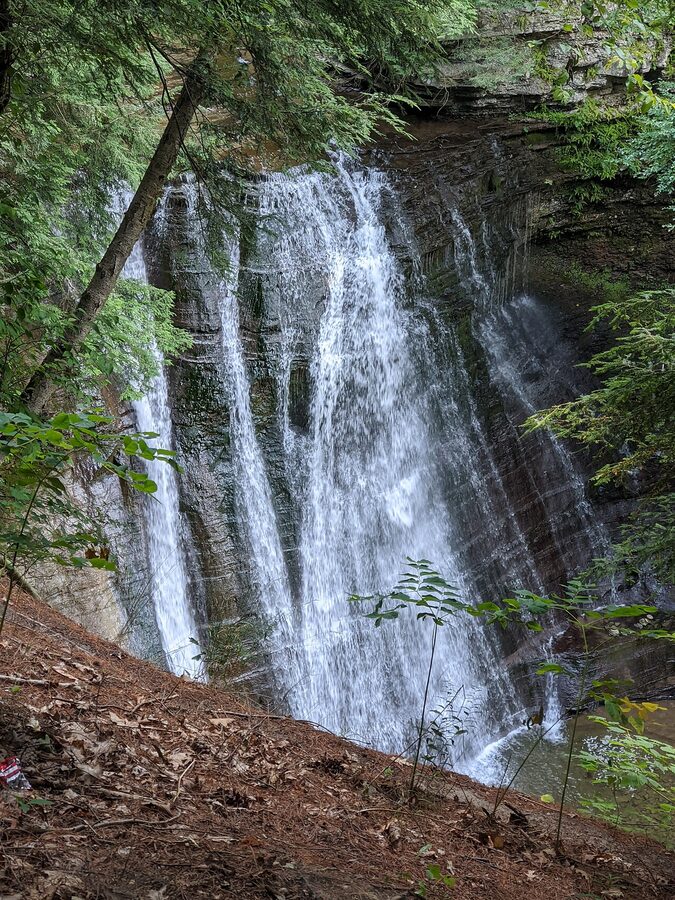
Stony Brook is in Dansville, on the western edge of the Finger Lakes region near Naples and the south end of Honeoye Lake. It has 124 campsites and a stream-cut gorge that’s a small, intimate version of Watkins Glen. The campground stays bookable longer because it’s not on the Watkins Glen radar.
For a wine itinerary this is the Canandaigua Wine Trail base. You’re about thirty minutes from Naples (grape pie season in early September is genuinely worth the trip), and the trail wineries are 25-45 minutes north. The Canandaigua Wine Trail guide covers the full loop from Rochester direction, which adapts to a campground base in reverse.
The free option: Finger Lakes National Forest
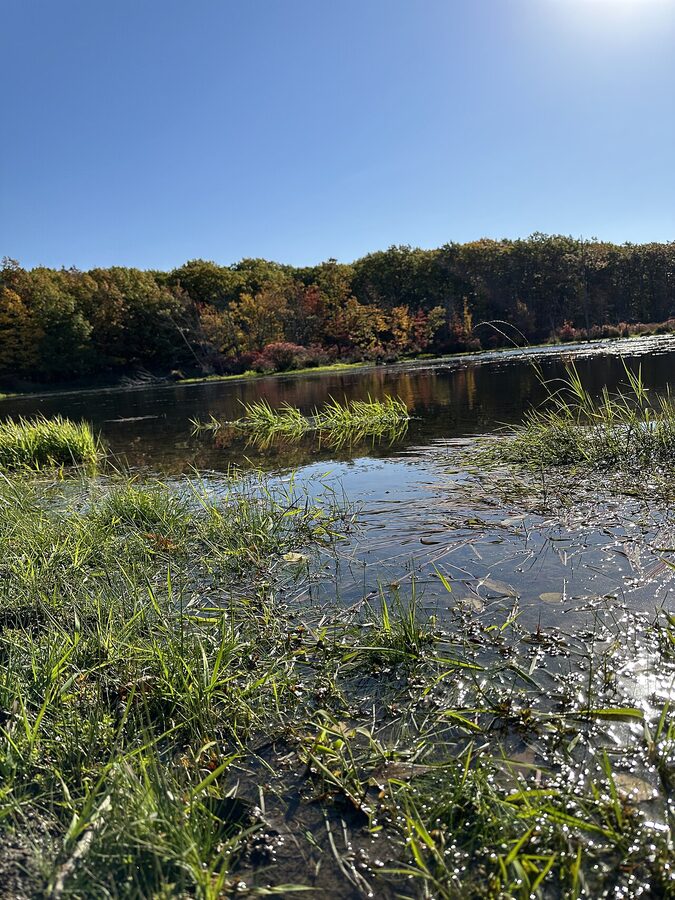
The Finger Lakes National Forest is the only national forest in New York State, sitting on a ridge between Seneca and Cayuga lakes. It has roughly thirty miles of multi-use trails and three established campgrounds. Two of those (Backbone Horse Camp, primarily for equestrians; Potomac Group Campground, for groups by reservation) need reservations. The third is dispersed camping, which is free, first-come-first-served, and follows the standard national forest rules: at least 50 feet from trails, roads, water sources, and established sites.
This is the option for backpacker-style camping, and the wine pairing is direct because you’re sitting between the two best lakes. Hector and Burdett are the trailhead access towns; both are within ten minutes of multiple Seneca east-side wineries, including Atwater, Damiani, and Hazlitt. There are no showers, no flush toilets, and you carry out everything you carry in. If you’re a Trad camper with a backpacking setup and you want to drink Riesling in a forest, this is the move.
The other free spots worth mentioning: state forests with at-large camping, including Birdseye Hollow State Forest (designated primitive lakeside campsites along Sanford Lake; permit required from the DEC office in Bath), Hammond Hill, and Morgan Hill State Forest. All free, all primitive, all require self-sufficiency.
Honeoye Lake and Conesus: the small-lake escape
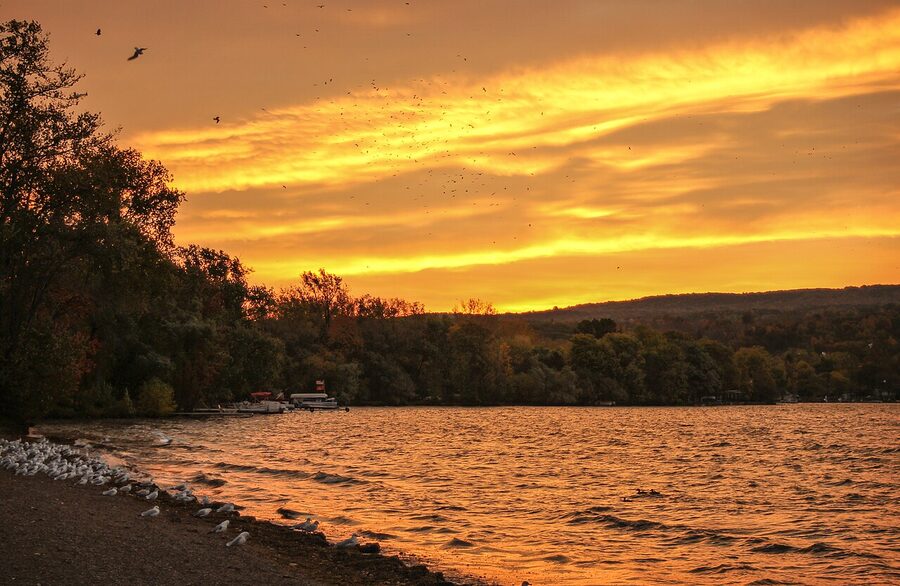
The smaller western lakes (Honeoye, Conesus, Hemlock, Canadice) don’t have state-park campgrounds, but they have private and town-park options that fly under the tourist radar. Honeoye has a town park with seasonal sites and a few small private campgrounds. Conesus has a couple of private operations and a town beach.
The wine pairing is via the Canandaigua trail to the east, about thirty minutes from Honeoye. The advantage here is solitude. You won’t be on a state-park map, you won’t be reserving eleven months out, and you’ll usually find a site within a week of when you want to camp.
Private campgrounds and KOA: when state sites are full
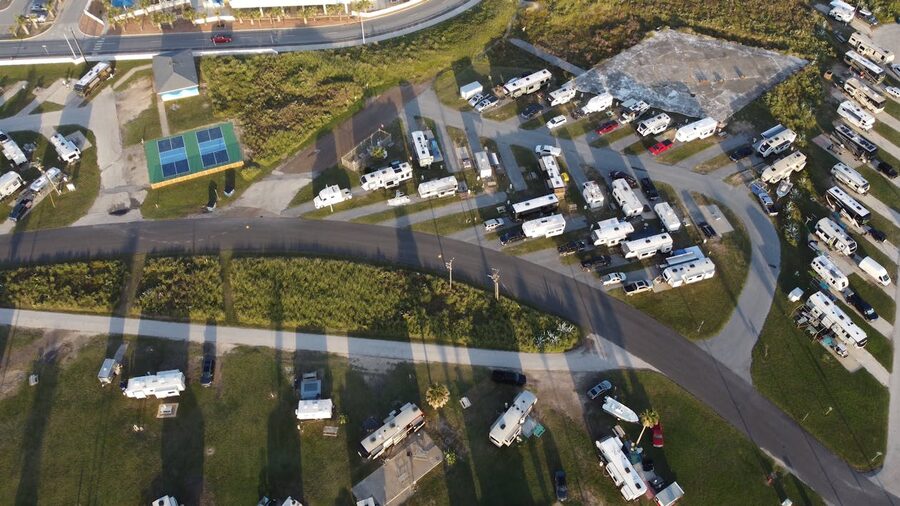
If the state system is closed out for your dates, your two next options are the KOA system and independent private campgrounds. The Waterloo/Finger Lakes KOA Holiday is the regional KOA, sitting on the Seneca River between Geneva and Seneca Falls. KOA pricing runs higher than the state parks (typically $50-$80/night for a tent site, $70-$120 for RV with hookups, and $120-$200 for a Kabin), but they have predictable amenities (pools, playgrounds, dump stations, propane refills, dog parks) and they take reservations through their app.
Independent campgrounds worth knowing:
- The Finger Lakes Campground in Branchport on the west arm of Keuka. Daily, monthly, and seasonal sites with up to 50-amp service. Better for hard-side trailers than tents.
- Camp Bell Campground in Campbell, NY. Pet-friendly RV sites with full hookups plus cabins. South of Watkins Glen and a fair drive from any winery cluster, but a stable backup when the state parks are closed.
- Sunset on Seneca Campsites in Lodi. Seasonal-use only, on Seneca’s east shore 300 yards from Lodi State Park. Mostly returning regulars who hold sites year after year.
- Wagner Vineyards’ tent-camping field (event-only, summer concert weekends). Not a real campground but worth knowing if you’re in for a Wagner show.
The tradeoff with private campgrounds is consistency. Some are excellent, some are tired RV lots with limited shade and old facilities. Read recent Google reviews. The big sites that bury their reviews under a self-published “5 stars” lot tend to be the older, less-loved ones.
Glamping and cabins: when you want indoor plumbing
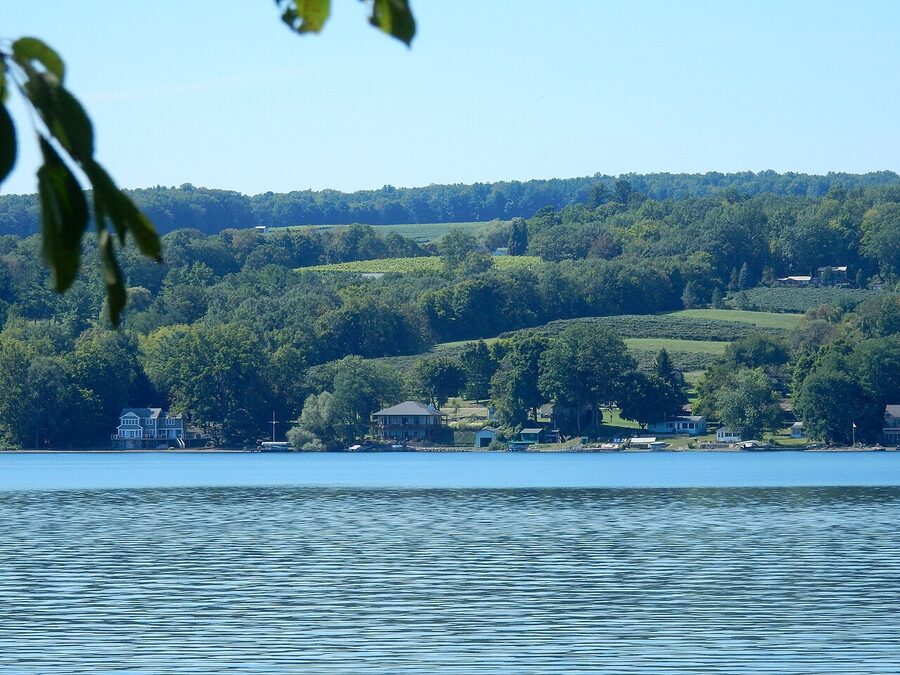
Three categories worth distinguishing:
Rustic cabins inside state parks. Watkins Glen, Taughannock, Cayuga Lake, Sampson, and Treman all have them. Bunks, electricity in most cases, no kitchen, no bathroom; communal showers nearby. $58-$70/night base. Booked through Reserve America the same way as campsites. These are the best dollar-per-night deal in the region. Real cabins on the same lakes start at $250/night privately.
Glamping at private operations. Hipcamp lists a handful in the Finger Lakes (Waterfall Creek and Pooh’s Corner are the perennials), with safari tents, yurts, and platform tents that come furnished. Pricing usually $150-$300/night for two. Not state park value but real glamping infrastructure. The downside is variable quality; read recent reviews carefully.
Lakefront cabin Airbnbs and VRBOs. Different category, usually multi-bedroom houses on the lake, $400-$1,200/night. For a group of six these can beat the per-person cost of camping plus the state park cabin rate. We cover the strategy in the Finger Lakes wine-tour packages guide, which includes hotel + tour combos and the case for a lake house over four B&B rooms.
For the cabin-and-Airbnb route via affiliate booking, search Booking.com directly for Watkins Glen lodging, Geneva area, or Hammondsport. Those three towns cover the Seneca south, Seneca north, and Keuka clusters.
Season notes: when to camp, what to expect
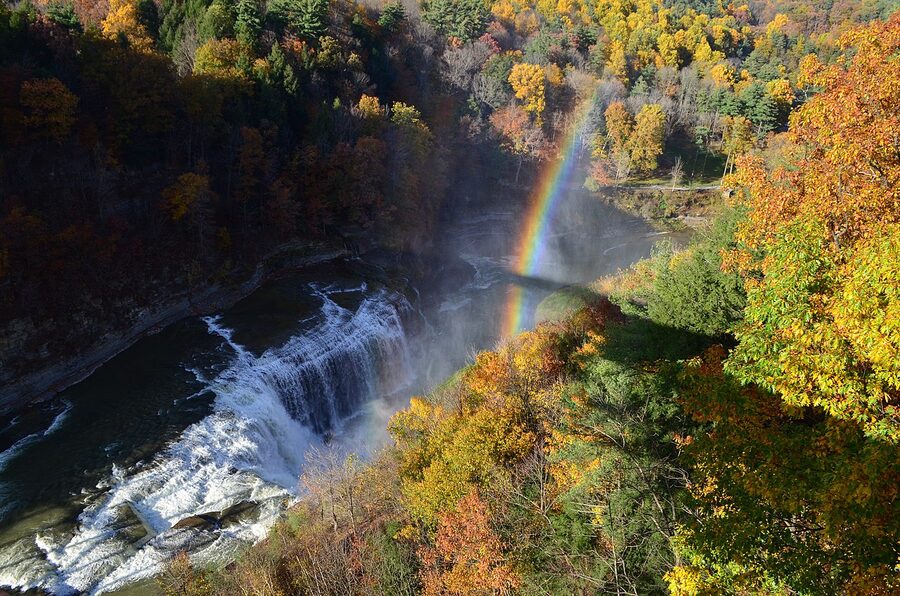
May: Cool nights (40s and 50s), bug-free, cheap, easy to book. The Watkins Glen Gorge Trail is closed through mid-month but the rim trails are open. Wineries are open and quiet.
June: Warm days (75-80°F), cool nights, peak bug pressure. Books up fast for weekends.
July-August: Hottest. Daytime 80s, occasional 90s. Pool season at Watkins Glen runs from late June through Labor Day. Reservations are essential.
September: The sweet spot. Warm days, cold mornings, harvest is on at the wineries (the most interesting time to visit, with crush smells and the actual winemakers around), and the Saturday weekend fights have eased.
October: Cold, beautiful, gambled. Peak leaves the second week. Book a cabin if you want indoor heating; the rustic cabins have wood stoves at some parks.
The Watkins Glen pool runs June 27 to September 7 in 2026. The Gorge Trail typically opens mid-to-late May depending on flooding and closes around October 26. The Finger Lakes National Forest is open year-round but trails get muddy in shoulder seasons.
The packing-down list nobody tells you
A few things specific to camping the Finger Lakes that I wish I’d known the first time:
- Bring layers for evenings. Even in July, lake-side campsites drop to the high 50s overnight. A fleece and a light puffy is the right combo.
- Reserve America’s site map is good. Use it before booking. The loops near the showers are often louder than the back loops, and lakeside sites at Sampson are in different price tiers depending on view angle.
- Wineries close earlier than you think. Most of the smaller producers close at 5pm. A few are open until 6 or 7. Plan tasting days to start by 11am if you want four stops.
- The Watkins Glen shuttle is $6 per person each way between the three park entrances. Useful if you want to walk the gorge trail one-way and not double back.
- Bring real bug spray. The lake-area mosquitos are a different species than the city ones. Picaridin works; citronella doesn’t.
- Cell service. Verizon is the most reliable across the campgrounds. T-Mobile is patchy at Sampson and Cayuga Lake. AT&T is fine at Watkins Glen but weak at the National Forest dispersed sites.
- Quiet hours start at 10pm at the state parks. They enforce this. Don’t be the campsite that gets a 10:15pm visit from the ranger.
The pickup wine-tour question
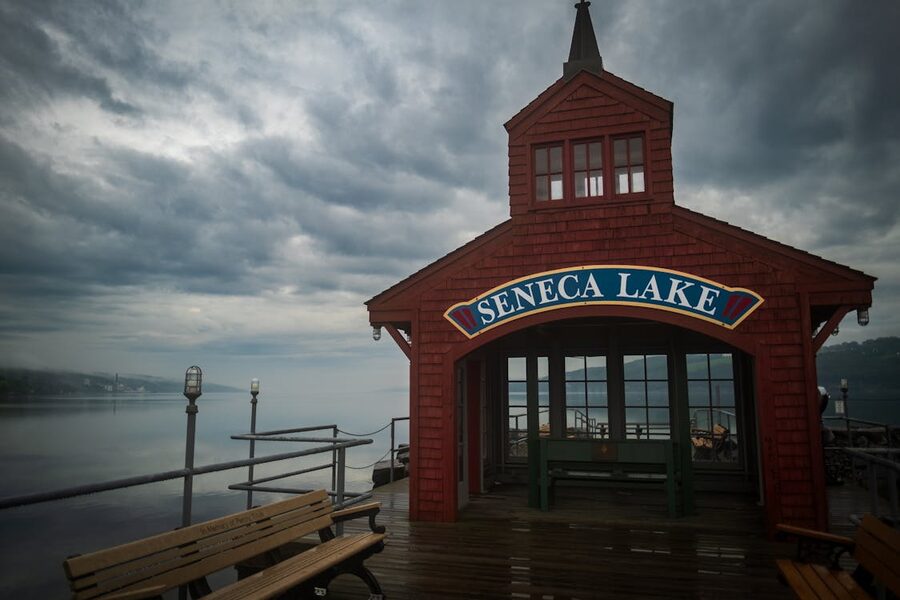
If you’re camping and you want to taste at multiple wineries without driving back, you have three options.
One: a Viator small-group pickup tour like the Seneca Lake South tour or the Keuka Lake tour featured above. Pickup is from a hotel, not your campground directly, so you walk or drive to the staging hotel and meet there. GetYourGuide also lists Finger Lakes wine tours with pickup from Geneva and Ithaca; useful if you’re at Cayuga Lake State Park or Sampson and want a Geneva pickup.
Two: a private bus or limo for groups of six-plus. The full operator comparison is in the Finger Lakes wine tour buses guide, which covers Crush, FitzGerald Brothers, Lakeside Trolley, and the rest with prices and itineraries. Most will pick up directly from a state park entrance for a small fee.
Three: a wine trail itinerary with one designated driver in the camping party. This is what most groups end up doing. It works well if you alternate driver days. Saturday Person A drives, Sunday Person B drives, you taste your way around both ends of one lake.
For a reference that ties campground locations to specific tour operators, see the main Finger Lakes wine tours guide, which is the parent piece for this whole network.
A blunt verdict on each park
If I had to rank the campgrounds by overall pick-something-and-go quality:
- For first-timers and wine-trail walkability: Watkins Glen. Park-walkable, downtown-walkable, and the gorge is right there.
- For easier booking and east-side Seneca wineries: Sampson. Bigger, calmer, lakefront, ten minutes from Wagner.
- For a regional base touching three lakes: Cayuga Lake State Park. Quietest of the big three, easiest weekday booking.
- For Riesling pilgrims: Keuka Lake State Park. Six minutes from Dr. Frank, six from Heron Hill.
- For the lake-cabin experience cheap: Taughannock cabins. Book the day they open, eleven months out.
- For Ithaca-base waterfall walking: Treman or Buttermilk Falls. Different parks, similar experience.
- For free, primitive, and forest-quiet: Finger Lakes National Forest dispersed sites. Bring everything.
- For when the state system is full: Waterloo KOA, then private campgrounds.
The biggest mistake I see new Finger Lakes campers make is booking too late. The state-park system is a lottery if you wait until April. Set the eleven-months-out reminder and you’ll never be the person paying $200 a night for a private RV park because the state campgrounds are gone.
Worth doing once. Then worth doing every year.
 Travel TipsFall Foliage in the Finger Lakes: When and WhereIf you have driven south on Route 414 in the second-to-last week of October, you already know what this article…
 Travel TipsBachelorette Weekend in the Finger LakesYour maid of honour just looked at the Hamptons quote and the colour drained from her face. Three nights, four…
 Travel TipsThings to Do in Canandaigua, NY: A Wine-Country TownYou drove down from Rochester for the gardens. That was the plan. Sonnenberg in the morning, lunch somewhere on Main…