
The cattle came before the wine.
Joseph Macari Jr. will tell you this. When his family started planting vines in the early 1990s on the Mattituck farm his father had owned for thirty years, the Long Island Farmers Association handed him a manual. Spray on this date. Spray that on this one. Joseph and his wife Alexandra would be raising four kids on the property. They put the manual down and went looking for another way. The cows, the Sicilian donkeys, the goats, the homemade compost piles taller than a person, the cover crops between the rows: that’s all part of how Macari became a vineyard. Most North Fork growers think Bordeaux when they plant a vine. Macari thought “farm”.
This is not a normal North Fork tasting. You’re on a working biodynamic farm where the wine is genuinely better for the way the dirt is treated. And the people pouring it know that, and they’ll tell you about it without being preachy. That part is rare.

What follows is the practical guide. Address, prices, what to drink, how to get a seat, what to combine it with. I’ll also tell you when Macari is the wrong choice.
In a Hurry?
Two ways most people who don’t live out east end up at Macari:
- Drive yourself. Macari is a two-hour ride from Midtown Manhattan via the LIE and Sound Avenue. Reservations open about 30 days out at exploretock.com/macariwines. Shoulder weekends (April, late October) get same-week openings; June through August book Tuesday for Saturday.
- Bus tour with lunch from NYC. The Long Island Winery Tour with Lunch from Manhattan on Viator includes Macari on most departures, plus two other North Fork stops, picnic lunch and round-trip coach. About €130 per person, ten hours door to door.
- Group of six or more? Skip the bus and book Macari’s Private Tasting Suite directly. $150 per person, two hours, five wines and lunch. The room with the pink crushed-velvet curtains you’ve seen on Instagram.
In This Article
- Where Macari sits, and why that matters
- The biodynamic angle, in plain language
- The tasting room and the deck
- Tasting formats
- What to drink
- The Sauvignon Blancs
- The Cabernet Francs
- The ‘Horses’ sparkling line
- The big reds
- Rosé
- What it costs, and what’s actually included
- Hours, reservations and the dog question
- Meadowlark, the sister property in Cutchogue
- How to combine Macari with the rest of the day
- The biodynamic and modern day (Mattituck → Cutchogue → Aquebogue)
- The all-Macari deep day
- The bus tour day from NYC
- Where to eat near Macari
- When to come, and when not to
- When to skip Macari
- If you’re planning a wider trip
Where Macari sits, and why that matters

The address: 150 Bergen Avenue, Mattituck, NY 11952. Phone: 631-298-0100. The tasting room sits about half a mile south of Sound Avenue, on the road that drops down toward the Long Island Sound shoreline. You’ll see the sign on your right going south, easy to miss the first time because the entrance opens onto a long farm lane rather than a parking lot at the road.
Mattituck is the second-from-westernmost of the North Fork tasting-room villages. Going east on Sound Avenue or Route 25 from Riverhead, you’ll hit Aquebogue, Jamesport, Laurel, and then Mattituck. Macari is about 75 miles from Manhattan and roughly an hour and forty minutes’ drive in light traffic, two and a quarter hours on a summer Friday. From Greenport at the tip of the fork, you’re driving back twenty minutes west to get here.

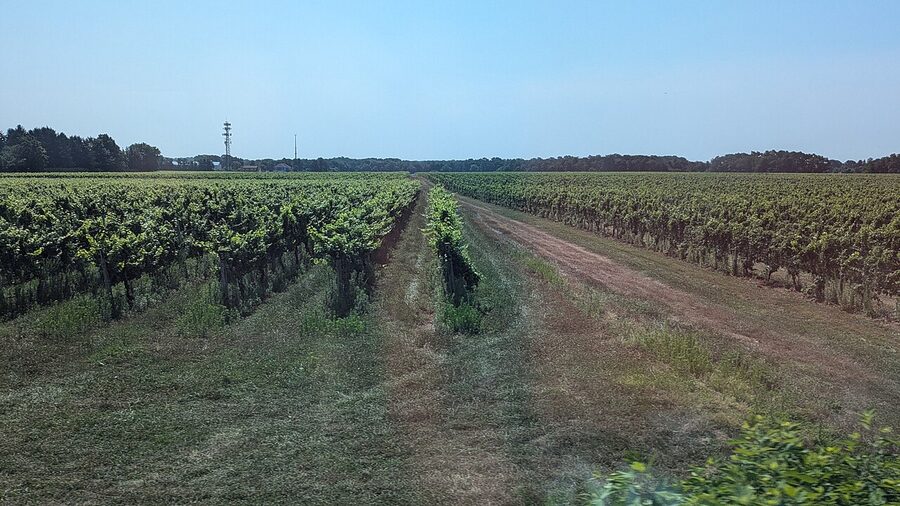
Why does the location matter for the wine? The North Fork is a long, narrow strip of land with the Long Island Sound on one side and Peconic Bay on the other. Macari’s 500 acres run almost the full width of that strip, about a mile of vineyard between the two bodies of water. The maritime influence is constant: cooler at night than inland New York, never the brutal winters of the Finger Lakes, and a long growing season that suits Bordeaux varieties (Cab Franc especially) and white grapes that need patience (Sauvignon Blanc, Chardonnay).
The biodynamic angle, in plain language

“Biodynamic” gets used loosely. At Macari, it means a few specific things you can see when you walk the property:
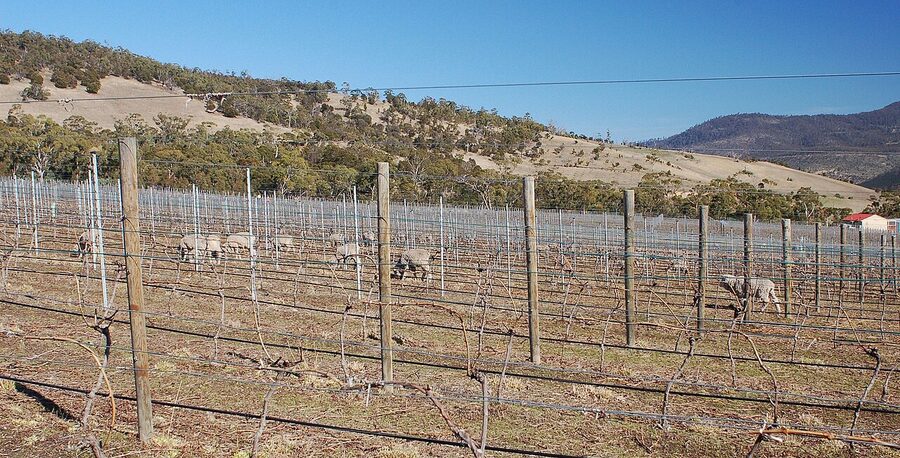
- A small herd of cattle, plus a few Sicilian donkeys, goats and ducks. Their job is to live on the farm, eat what grows, and produce the manure that becomes compost. (Yes, the donkeys also act like guard animals.)
- Compost rows tucked into the perimeter fields. The Macaris use everything from cattle manure to fish heads sourced from the local docks to spent coffee grounds. It cooks for months.
- Cover crops between the vine rows. Instead of bare dirt sprayed clean of weeds, you’ll see clover, vetch and grasses doing the soil work that conventional growers ask herbicides to do.
- No herbicides at all. None. The Macaris adopted Demeter-style biodynamic principles from the start in the mid-1990s, with the late biodynamic consultant Alan York helping shape the program.


Joseph Jr. is widely credited as the pioneer of natural farming on Long Island. Master of Wine Nick Jackson put it well in Food & Wine: “To eschew chemicals in the vineyard is to take the road less traveled in this part of the country. It’s a hard choice that only a family business could likely take.”
The takeaway for a visitor: this is not a marketing brochure. The farm is real, the cows are real, and the wines taste like the place. If that doesn’t move you, that’s fine; the wines are good enough to drink on their own merits. If it does move you, you’ll have plenty to ask about when you sit down.
The tasting room and the deck
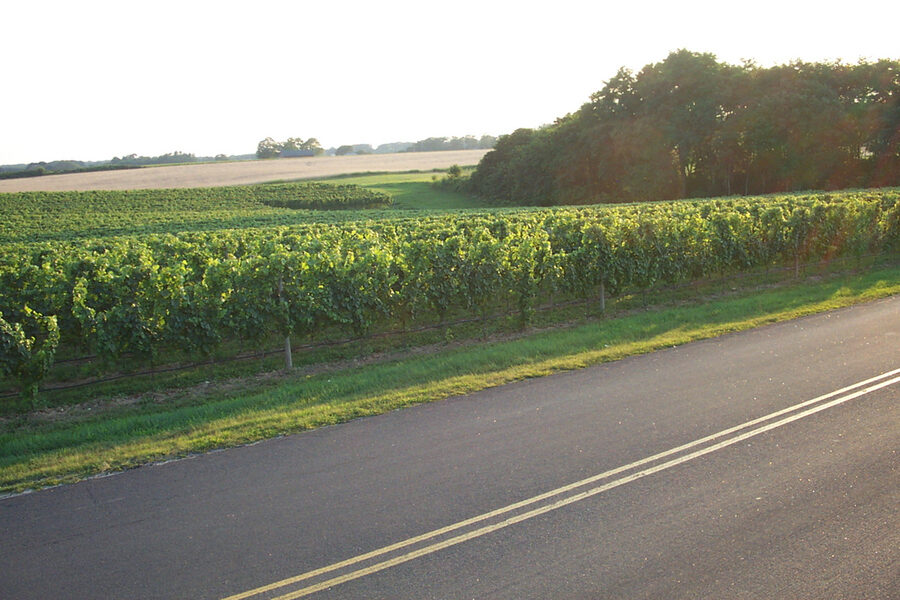
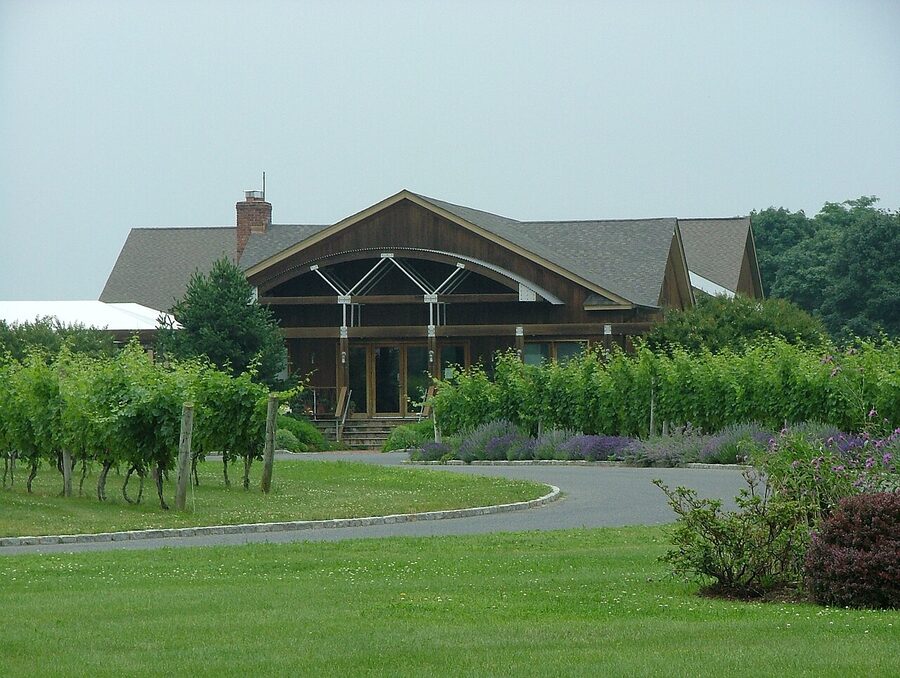
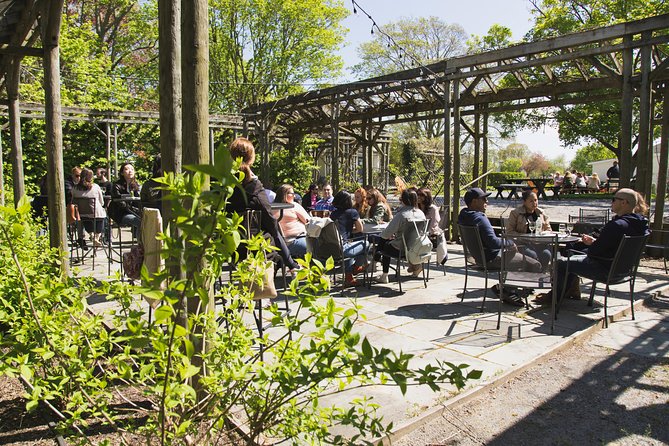
The tasting room is a glass-walled great room designed by architect Carol DiCicco-Vinci, with a stone-and-timber covered deck wrapped around the south side. From the deck, the vineyard stretches out below you. There’s a working fireplace inside for cold-weather visits, and a long wooden tasting bar that holds about eighteen people standing.
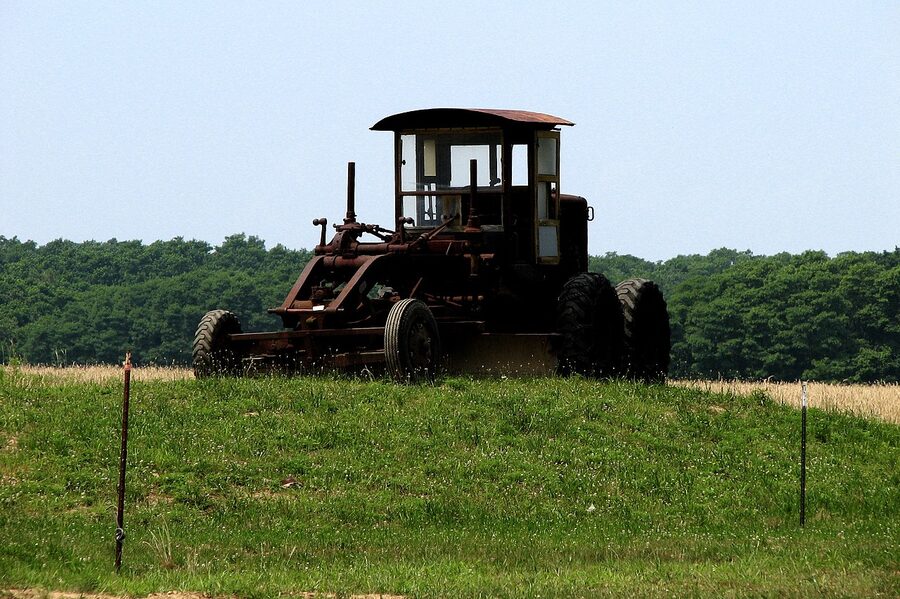
The room sits at the edge of the working farm. You’ll see tractors, you might see one of the dogs, and on a busy Saturday you’ll hear the clink of glasses against the conversation. It’s not Napa-formal. It’s also not a barn-with-a-sign farm-stand operation. The split is the whole point.
Tasting formats
Reservations are required for all tastings. Walk-ins are not seated, even on a slow Tuesday. Book through Tock at exploretock.com/macariwines. The standard formats:
- Guided flight on the deck. Five wines, about an hour, $35 to $45 a head depending on the season. A Macari educator pours, talks through the wines, and answers questions. This is what you book for a first visit.
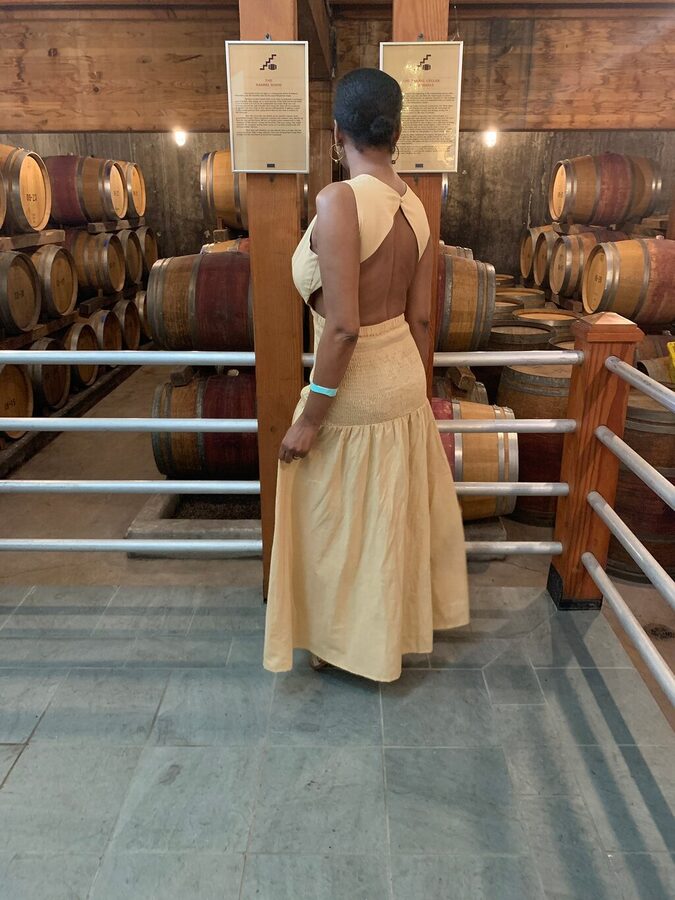
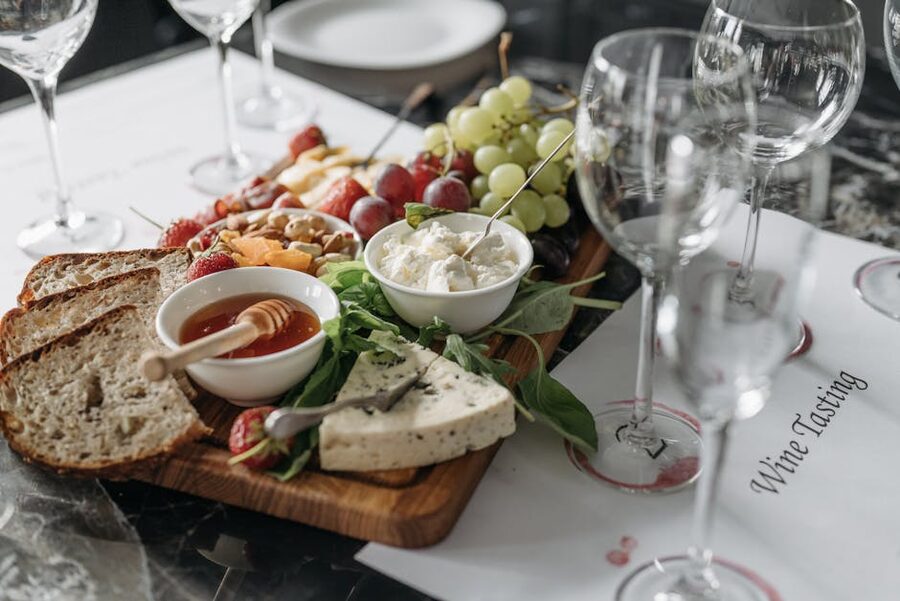
- Barrel cellar tasting. A more in-depth seated experience downstairs in the working barrel room. Five or six wines paired with cheese and charcuterie. About $65 a head, 75 minutes. Book this if you’ve already done a flight elsewhere on the fork that day and want to go deeper.
- Private Tasting Suite. The high-end room with the seasonal redesign. $150 per person, two hours, five wines plus a sit-down lunch. Six-person minimum on weekdays, ten-person minimum on weekends. Book at least three to four weeks out.
The Suite is worth a separate paragraph. Twice a year, Director of Events Lauren Conklin redesigns it around a wine theme. The most-photographed version is the rosé room: pink crushed-velvet curtains, mini disco balls wrapped in pink-frosted baby’s breath, a retro record player, and an L-shaped lounge that, yes, looks like Barbie’s Dream House. The lunch is run by Chef Lauren Lombardi: Mediterranean grazing board, freshly baked focaccia, lemon-roasted chicken over quinoa, herbed pasta salad, sea-salt-dusted chocolate chips to finish. It’s the right move for a bachelorette, a milestone birthday or a wedding party, and it does sell out.
What to drink
Macari makes more wines than you can taste in a single visit. Here’s what I’d ask to be poured if I had five glasses to spend.
The Sauvignon Blancs
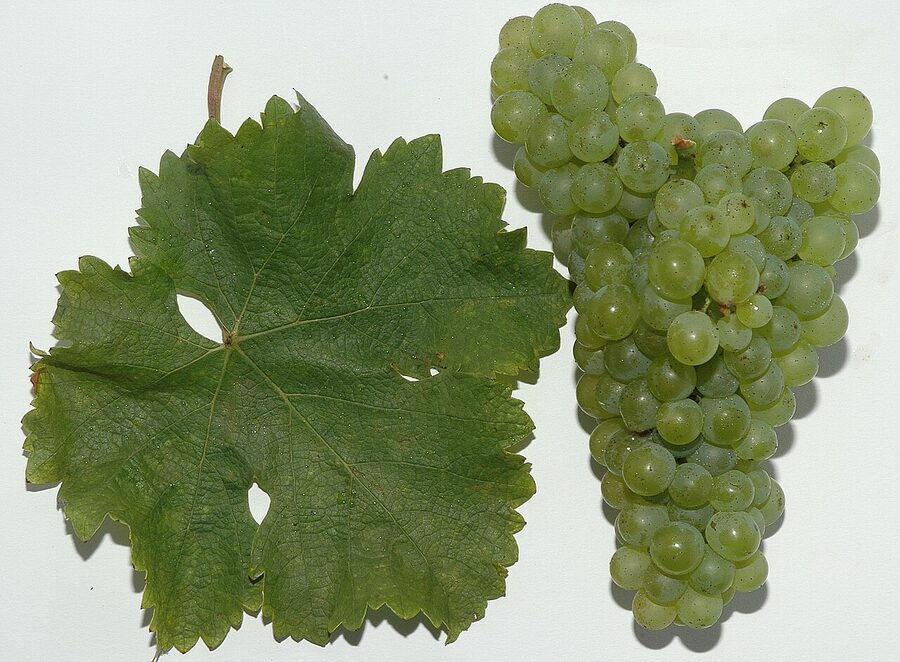

If you only know Sauv Blanc as the Marlborough cat-pee style or the Loire flint version, Macari’s are a third path. The estate has been pouring Sauv Blanc longer than almost any North Fork producer.
- Sauvignon Blanc ‘Lifeforce.’ Concrete-egg fermented. Touches of stone fruit and almond around a clean herbal core, no oak. Wine writer Gabe Sasso called it a “stunning example of what can be accomplished on Long Island.” This is the one I’d buy a case of.
- Katherine’s Field Sauvignon Blanc. Single-vineyard, named for matriarch Katherine Macari. Crisper, more direct, more racy on acid. 92 points from Cristaldi & Co for the 2024.
- Meadowlark ‘Wild Ferment’ Sauvignon Blanc. Spontaneous fermentation, stainless aged seven months. Pink grapefruit, oyster-shell minerality. 93 points from VinePair. Made at the Cutchogue sister property; ask if it’s pouring.
The Cabernet Francs
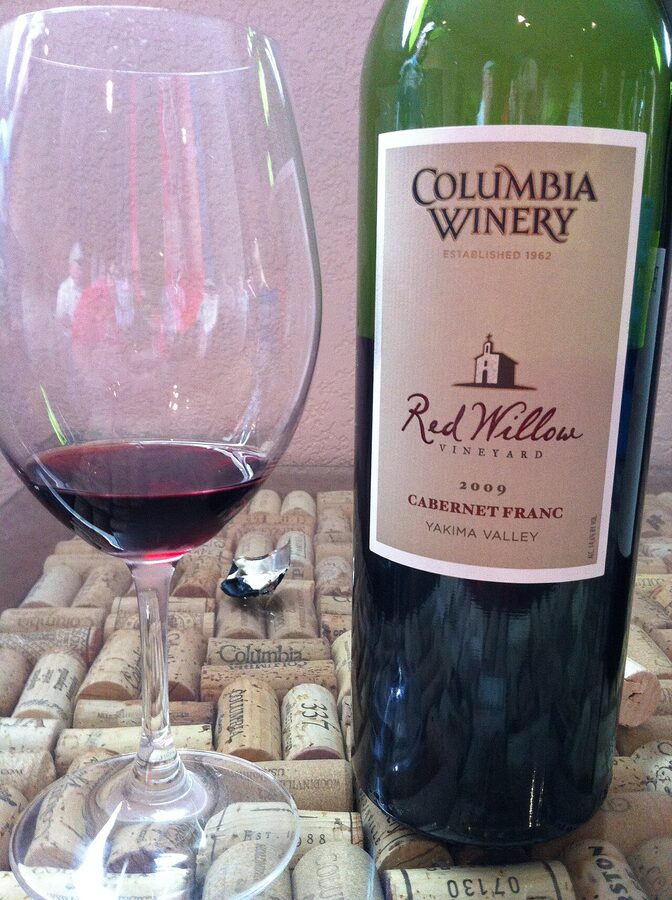

Cab Franc is the underrated red of the North Fork, and Macari is one of the best three or four producers of it in the state. The standard 2024 picked up 92 points from James Suckling. The Cab Franc Lifeforce 2024 (concrete egg again, less new oak) got 91 points the same week. The 2022 vintage of the regular Cab Franc is what Cristaldi & Co rated 94 points last summer. If it’s still pouring, that’s the bottle to taste.
If you’ve only ever tried Cab Franc as a Loire Chinon or a California blender, the Macari version will surprise you. There’s freshness and acidity that the warmer-climate reds don’t get, with the cedar-and-cherry profile intact.
The ‘Horses’ sparkling line
The Horses bottle is the one with the bright, almost cartoonish label. It’s an ancestral-method (pet-nat) sparkler, made in two versions:
- ‘Horses’ Sparkling Cabernet Franc. Pink, lightly fizzy, red-berried. Tasting Table writer Erica Duecy called it “everything you want in a pink summer wine, a thirst-quenching, red-berried sparkler that doesn’t take itself too seriously.” Around $28 a bottle.
- ‘Horses’ Petit Verdot. Same playful approach with the deeper, more structural Bordeaux variety. 92 points from Cristaldi & Co for the 2023. Drink it cold, on a warm day, ideally on the deck.
The big reds
If you’re a Bordeaux drinker or a serious red person, the wines to ask about are Bergen Road, Alexandra and Dos Aguas. These are the multi-variety blends that age and that put Macari on the radar of the bigger US wine press.
- Bergen Road. Merlot, Cab Franc, Cab Sauv and Petit Verdot blend. The 2022 was singled out by James Suckling: “sticky tannins carry plums, cocoa powder and cherry liqueur alongside tobacco and ancho chili.”
- Alexandra. The other top blend, named for Joseph Jr.’s wife. 2022 took silver at the 2026 TexSom International Wine Awards. The Cork Report’s Lenn Thompson described “ripe black-and-blue fruit aromas… layered with minty lift, floral tones, grilled meat savoriness.”
- Dos Aguas. The “between two waters” blend (the bays on either side). Lower priced than Bergen Road, drinks well young, the entry into the serious-red lineup.
Rosé
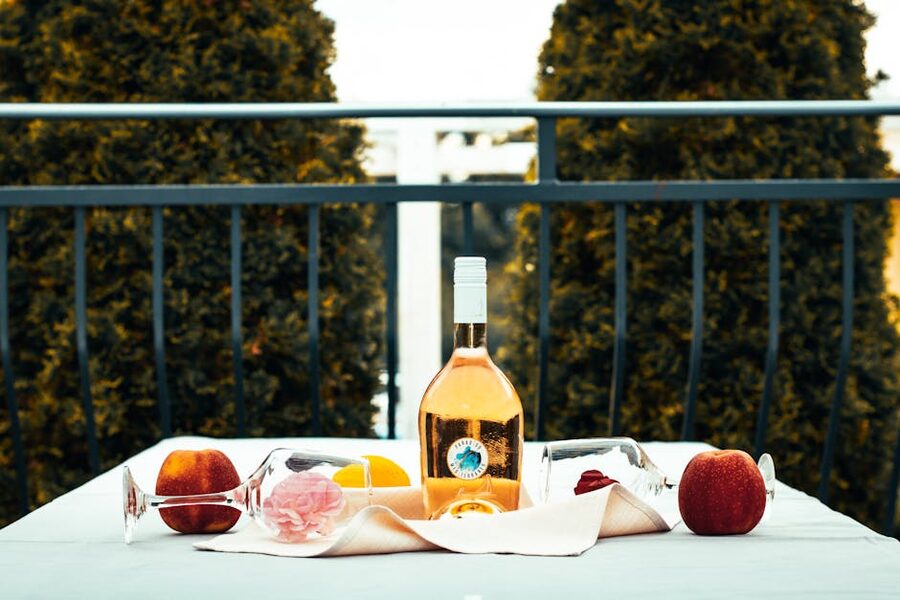
Macari’s standard Rosé is a malbec/pinot noir/petit verdot blend. The Cork Report called the 2024 the best Macari rosé in years: cranberry, strawberry, raspberry, orange zest. The Meadowlark Cabernet Franc Rosé is the alternate, 100% Cab Franc, more savory and herbal. If you’re rosé-curious rather than rosé-committed, ask for both side by side.
What it costs, and what’s actually included
Here’s the real-world price range for a visit, before you buy bottles:
- Standard guided flight on the deck: $35–$45 per person.
- Reserve cheese and charcuterie add-on: $25–$60 depending on size.
- Glass pour: $14–$22 most wines; high-end blends $30+.
- Bottle to drink on the deck: full menu price; you can order and stay seated rather than buying a flight.
- Barrel cellar tasting: around $65 per person, 75 minutes.
- Private Tasting Suite: $150 per person, two hours, includes lunch.
The most common misread of a North Fork visit is budgeting too low. Plan on $80–$120 per person for a flight plus a cheese plate plus a glass over the lunch hour. If you’re buying a couple of bottles to take home, you’re easily at $200 per couple. The wines are reasonably priced for the quality, but the visit isn’t free, and the pricing matches Sonoma and Hudson Valley rates.
Hours, reservations and the dog question
Macari’s tasting room is open daily, year-round. The schedule that holds most weeks:
- Monday–Friday: 11am to 6pm
- Saturday and Sunday: 11am to 6pm
Last seating is around 4:45pm even though the room officially closes at 6pm; the staff need time to clean and the kitchen winds down. Tastings run about an hour for the standard flight, longer for the cellar and Suite formats.
Book through Tock (exploretock.com/macariwines). Same-day reservations are sometimes available on weekdays in shoulder season; never on a summer Saturday. You can also call 631-298-0100 if you’re trying to coordinate a group of six to ten and need to talk to a human.
Dogs are welcome. The staff put out water bowls without being asked, and Macari is one of the few North Fork rooms that lets dogs indoors during winter. Leashes required, and the deck is the right spot for canine guests in warm weather. If you’re bringing a young or anxious dog, the morning slot is calmer.
Kids are not the right call here. The room is adults-mostly and the experience is a tasting, not a vineyard playground. RGNY further west has more outdoor space if you’re traveling with a stroller.
Meadowlark, the sister property in Cutchogue
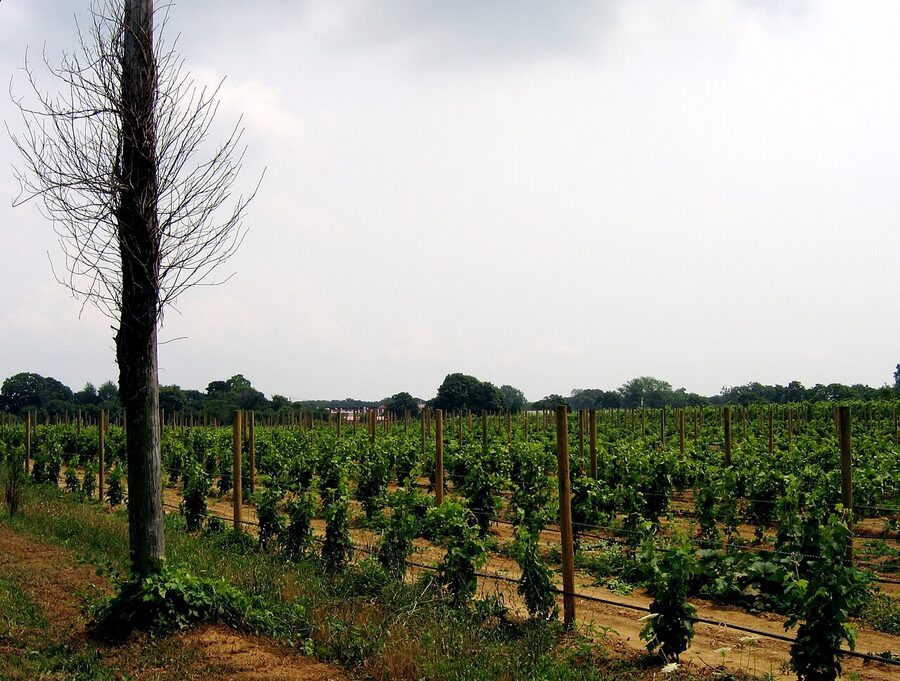

About fifteen minutes east of the main tasting room, in Cutchogue, the Macari family operates Meadowlark North Fork. It’s a separate destination, not a satellite. A small wine bar focused on limited-production wines and experimental projects that aren’t poured at Mattituck.
You’ll find:
- The Meadowlark ‘Whole Cluster’ Cabernet Franc (2023 got 93 points from Cristaldi).
- The ‘Wild Ferment’ Sauvignon Blanc.
- Cab Franc and Pinot Noir rosés that don’t make it into the Mattituck flight.
- Skin-contact Friulano, sparkling Cab Franc, and the Pinot Noir made by winemaker Byron Elmendorf.
Meadowlark also has its own private-event space; the seated experience is more intimate than the main tasting room and the focus is on conversation about the wines rather than on the view. If you’ve done Mattituck before and want the next layer down, Meadowlark is the move.
How to combine Macari with the rest of the day
.jpg)
The standard mistake on a first North Fork day is trying to do six tastings. You will not enjoy any of them. Three is the right number, four if you keep the last one short. Macari is a 60–75 minute commitment if you’re tasting properly.
Three working pairings:
The biodynamic and modern day (Mattituck → Cutchogue → Aquebogue)
- 11:00am Macari (Mattituck). Open with the Sauv Blanc and the Cab Franc. Walk the deck.
- 12:30pm Bedell Cellars (Cutchogue). Modern tasting room, contemporary art, Cab Franc and Merlot. Twelve minutes east on Route 25.
- 2:30pm Paumanok (Aquebogue). Family-run, dry Chenin Blanc (rare in NY), the verandah. Twenty minutes west on Route 25 from Bedell.
- 4:30pm Late lunch at Lombardi’s Love Lane Market in Mattituck for sandwiches, or stay sit-down at North Fork Table & Inn in Southold if it’s running tasting menu hours.
Drive yourself or hire a car for this routing. The three stops aren’t on a viable bus loop.
The all-Macari deep day
- 11:00am Macari main tasting room. Full guided flight with cellar add-on.
- 1:00pm Lunch at Love Lane Kitchen in Mattituck, ten minutes north.
- 2:30pm Drive fifteen minutes east to Meadowlark in Cutchogue. Limited-release flight there.
- 4:30pm One last sunset drink. Try the bar at North Fork Table & Inn, or head to Greenport for a pint before driving back.
This is the day for someone who’s already done the North Fork once and wants to go deep on a single producer. Sober driver mandatory.
The bus tour day from NYC
If you can’t drive yourself, the Long Island Winery Tour with Lunch from Manhattan on Viator is the relevant option for Macari specifically. It departs from Midtown around 10am, hits three North Fork wineries (Macari is on most departures, swapped occasionally with Lenz nearby), includes a picnic lunch, and gets you back to Manhattan around 8pm. About €130 per person.
Long Island Winery Tour with Lunch from Manhattan
The “#1 Rated” Long Island wine tour in the Viator catalogue. Macari is on most summer departures. Reviews flag the lunch as solid, the guides as warm, and the bus seating as standard coach. Best for a first North Fork day from Manhattan; not the right move if you want to choose your own three wineries.
The other GetYourGuide option that goes to North Fork wineries (and may include Macari on some dates) is the NYC Long Island Sommelier-Guided Wine Tasting Tour run by Crush Wine Experiences. Two wineries, sommelier guide, around €127 per person. Smaller groups, more wine explanation, fewer stops. I’d take this one if you’ve done the Viator tour before and want a different angle.
For private group transport from Manhattan or out east, the operators that consistently appear in the search results for North Fork wine tours include North Fork Wine Tours (Greenport-based, mid-range pricing, good for 6–14 person groups) and East End Wine Tasting Tours (also includes Macari on their North Fork itineraries). Both will customise for which three or four wineries you want to hit.
Where to eat near Macari
Mattituck and the surrounding villages are not short on food. The nearest options to the tasting room:
- Love Lane Kitchen (Mattituck, ten minutes north of Macari). Daytime brunch and lunch. Three-egg omelets, smoked salmon plates, big salads. The right spot for a 2pm post-tasting meal.
- Lombardi’s Love Lane Market (Mattituck). Sandwiches and prepared foods. Picnic move if you’re heading on to another winery.
- aMano Restaurant (Mattituck). Italian, pasta-forward, a real dinner option if you’re staying late. Reserve.
- Jamesport Farm Brewery (Jamesport, fifteen minutes west). Beer break for the wine-fatigued in the group. Good fries.
- North Fork Table & Inn (Southold, twenty-five minutes east). The serious dinner reservation in the area. Tasting menu, three months out for weekend nights.
Macari does not have its own kitchen. You can order cheese plates, charcuterie boards and small bites with your tasting; you cannot bring outside food. Plan the meal separately.
When to come, and when not to
.jpg)
The North Fork has four seasons in a way most of the East Coast doesn’t.
- Late May to early July. Long days, vines green and growing, deck weather most days, peak rosé season. Reservations are tight on weekends. My favourite window.
- Late September to mid-October. Harvest. The vineyard is busy, you can sometimes see picking from the deck, and the wines from the previous vintage are showing well. Sweater weather. Book three weeks out.
- August. Hot, busy, swarms of bus tours. The wines are fine but the experience can feel like a cattle yard. Skip Saturdays in August unless you have no choice.
- November to February. Quiet. Indoor tasting room with the fireplace going. Walk-in is sometimes possible on weekdays. The cellar tasting is at its best in cold weather.
- March to early April. Mud season. The wines from the previous vintage are still settling. The Suite redesigns happen now, so you can sometimes get the new pink room in mid-April before the bachelorette parties book it solid.
When to skip Macari
Macari is not the right choice if:
- You want a casual walk-in. Reservations are required, and the staff will turn you away if the room is full.
- You want a cheap day. The tasting plus a cheese plate plus a glass will run you a hundred dollars before you buy a bottle.
- You want a small intimate room. The main tasting room is busy on weekends. Croteaux in Southold or One Woman in Southold are quieter alternatives.
- You are with kids. There’s no facility for it.
- You are a Pindar-style “sample twelve wines for $20” drinker. That’s not the model here.
And one criticism I’ll level: the Tock booking interface is fine but doesn’t always show the Suite as bookable when it has openings; call instead. The deck heaters in early spring are inconsistent. The walk from the parking lot to the tasting room is about 80 metres on gravel, which is annoying in the wrong shoes.
None of that changes the verdict. Macari is one of the four or five North Fork wineries that’s actually worth the drive from anywhere in the tri-state. The wines are the proof, the farm is the context, and the people pouring know both.
If you’re planning a wider trip
Macari sits inside a much larger North Fork wine landscape. A few starting points:
- For the full lay of the land, my Long Island Wine Tours playbook covers the LIRR carless angle, the West-to-East driving plan, and the day-trip vs overnight question.
- For a 12-stop list of who else is worth your drive on the North Fork, see Best North Fork Wineries: 12 Stops Worth Your Drive.
- If you’re choosing between the North Fork and the Hamptons side, my Hamptons Winery Tours: A South Fork Day Out compares the two forks. Wölffer wins on hospitality scale, Macari wins on wine quality.
- For NYC-departing tour comparisons across all five day-trip directions, the Wine Tours from NYC: 5 Day-Trip Plans Ranked piece tells you whether the North Fork is the right pick for your weekend or whether Hudson Valley would suit better.
- If your group needs a private vehicle and a driver, the Long Island Wine Limo Tours: 8 Operators Compared guide compares the local operators on price, group size and wine knowledge.
And if Macari turns you on to North Fork wine, the next visit should probably be Bedell Cellars (Cutchogue) for the modernist art-forward tasting room and Paumanok (Aquebogue) for the dry Chenin Blanc and family story.
 Travel TipsFall Foliage in the Finger Lakes: When and WhereIf you have driven south on Route 414 in the second-to-last week of October, you already know what this article…
 Wine RegionsSheldrake Point: Cayuga Lake’s Lakefront Tasting RoomThe first time I drove down County Road 153 to Sheldrake Point, I missed the turn. You come around a…
 Travel TipsThings to Do in Canandaigua, NY: A Wine-Country TownYou drove down from Rochester for the gardens. That was the plan. Sonnenberg in the morning, lunch somewhere on Main…